Battir: A Landscape in Flux
Carving Eternity into the Slopes of Battir
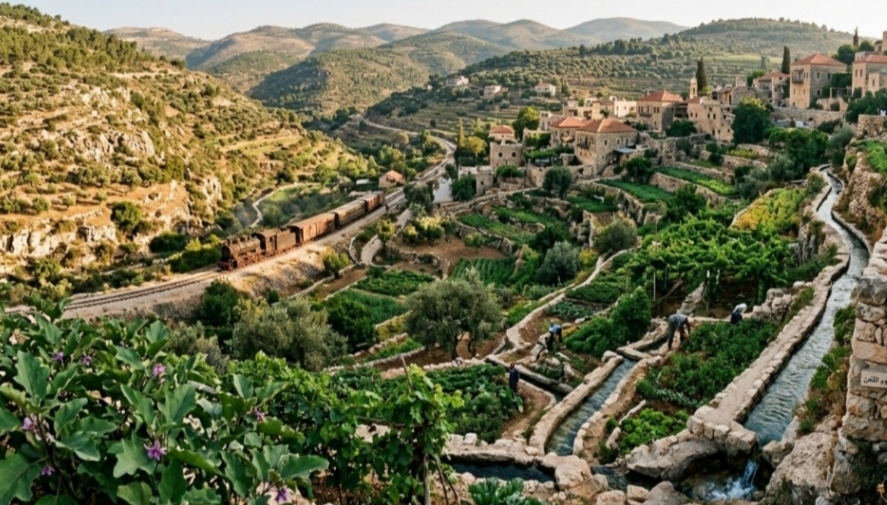
Battir
In the heart of the hills stretching between Jerusalem and Bethlehem lies Battir — a Palestinian village that has never surrendered its title as a “living natural museum.” More than a village, Battir is a poem written in water and trees; a quiet story of steadfastness where nature and human will triumphed together, earning the village recognition on the UNESCO World Heritage List as a cultural landscape worthy of international protection.
The Water Terraces: Ancestral Engineering Untouched by Time
The moment your feet touch the soil of Battir, you are met by its breathtaking agricultural terraces — jannayin — carved into the mountainsides since the Canaanite era thousands of years ago. Here, Palestinian farmers developed a remarkable irrigation system known as al-Ma‘doud, a meticulously timed method of water distribution among families. Through stone channels, spring water flows with an ingenuity that predates modern engineering by centuries.
The Mystery of the Eighth Day: Battir’s Own Calendar
In Battir, time obeys different laws. The week here does not end with the seventh day — it extends into an eighth. This is no legend, but part of the brilliance of the al-Ma‘doud system itself. Because the village depends on eight principal springs, the agricultural cycle was divided into eight days, with each family awaiting its designated “day” every eight days to irrigate its terraces. Battir reshaped time to follow the rhythm of water, creating a social calendar unlike any other in the world.
The Hejaz Railway: Echoes of History Through the Valley
No story of Battir is complete without its valley, through which the historic Jaffa–Jerusalem railway still passes. Once a vital economic lifeline, the railway cuts alongside the village homes, creating an almost cinematic landscape where iron and wilderness meet — a lasting reminder of Battir’s strategic place as an eternal gateway to Jerusalem.
Guinness and UNESCO: When Beauty Becomes a Shield of Resistance
Battir was never merely a quiet agricultural village; it became a stage where beauty itself turned into an act of resistance. The village entered the Guinness World Records after hosting the longest Ramadan iftar table, stretching across its terraces as a cultural declaration against the Separation Wall that threatened to divide its land. This cultural resilience later led to Battir’s inscription as a UNESCO World Heritage Site in 2014, transforming it into a legacy belonging to all humanity.
Battiri Eggplant: The Taste of the Land and Its Story
Every land has its signature, and in Battir, it is the famed Battiri eggplant. Nourished by pure spring water and the village’s rich volcanic soil, this crop carries a sweetness and texture unlike any other. Annual festivals have been dedicated to it, until it became more than a harvest — it became a symbol of a farmer so deeply rooted in his land that he came to resemble it.
An Unyielding Bloom
A visit to Battir is not a passing excursion, but an immersion into the roots of identity itself. It is a place that proves beauty can become a form of resistance, and that land nourished with love and order refuses to die. If you wish to witness how humanity and history embrace one another and bloom together, then Battir must be your next destination — the village that insists on remaining forever green.