Beersheba- Echoes of the Oasis
A sanctuary of stone, soil, and the warm hospitality of the southern wind.
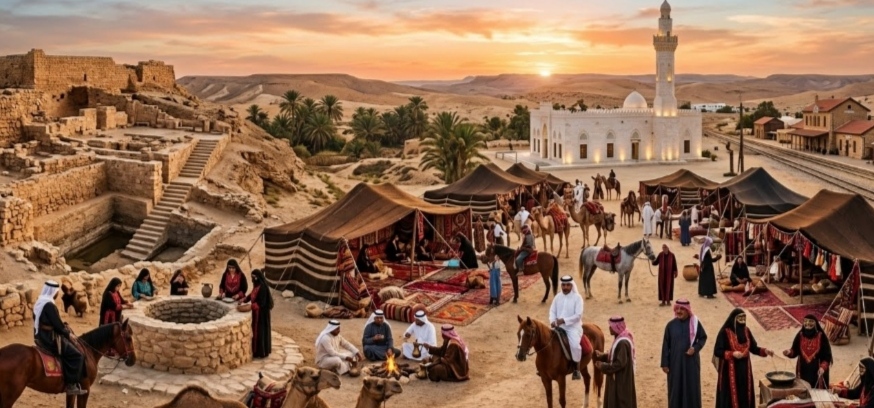
Beersheba
Imagine a city where the resilience of the desert intertwines with the serenity of its oases — a place that has long stood as the gathering point of caravans and the eternal capital of the Negev. This is Beersheba: a city of deep-rooted history and enduring traditions, where every stone whispers stories of prophets and echoes the valor of Arab tribes across the heart of the desert.
Geographical Setting
Situated in the southern part of Palestine, Beersheba serves as the principal gateway to the vast Negev Desert and the crossroads connecting Palestine with the Sinai Peninsula and Jordan. Its climate is distinctly desert-like — scorching summers balanced by cold winters — shaping both the rhythm of life and the spirit of its people.
Historical Landmarks and Heritage Sites
1. Tel Beersheba Archaeological Site Home to the remains of an ancient city and an astonishingly sophisticated water system dating back to prehistoric eras, reflecting the ingenuity of early civilizations that flourished in the desert. 2. Abraham’s Well A historic landmark traditionally associated with the Prophet Abraham, from whom the city draws both its name and a significant part of its spiritual legacy. 3. The Grand Mosque Built during the Ottoman era, this architectural gem is distinguished by its pale stone walls and soaring minaret, embodying the elegance of classical Islamic design. 4. The Ottoman Railway Station A living testament to the city’s role as a historic transportation hub, once linking Beersheba to surrounding regions and distant lands.
Traditional Crafts and Occupations
1. Horse and Camel Breeding An inseparable part of the city’s Bedouin identity, with renowned horse races and camel competitions preserving the traditions of the desert. 2. Handwoven Textiles Bedouin women are celebrated for weaving Bayt al-Sha‘r — traditional black goat-hair tents — alongside vividly patterned rugs crafted from sheep and camel wool. 3. Souq al-Khamis (Thursday Market) A historic marketplace where merchants and Bedouin communities gather to trade livestock, handmade goods, and traditional desert products.
Traditional Cuisine — The Taste of the Desert
1. Mansaf The centerpiece of hospitality, prepared in its authentic form with lamb, fermented jameed, and clarified butter. 2. Makmoura and Fatteh Hearty dishes built around shrak bread and tender meat, reflecting the generosity and communal spirit of Bedouin hospitality. 3. Arabic Coffee Whether bitter or delicately infused with cardamom, Arabic coffee remains an enduring symbol of welcome in every Beersheba home.
Traditional Dress — The Elegance of Bedouin Embroidery
• The Black Bedouin Thobe Known for its flowing silhouette, the dress is adorned with vivid red embroidery for married women, while different colors and motifs often signify social status and tribal identity. • The Burqa‘ A traditional face covering embellished with silver coins and colorful beads, treasured not only for its beauty but also for its cultural and historical significance. • The Cloak and Headwear For men, the long robe, the bisht cloak, and the agal headband remain enduring symbols of dignity, prestige, and authentic Arab heritage.