Ein Qiniya
A Village Hidden Between Springs, Stone, and the Last Quiet Breath of Old Palestine
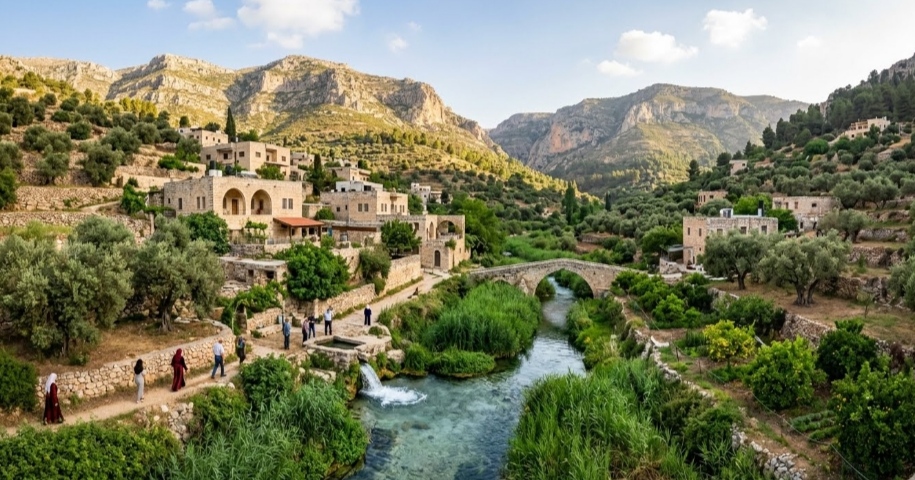
Where Water Writes the Memory of the Hills
In the highlands northwest of Ramallah, where winding roads slip gently between mountains and valleys, lies the village of ‘Ayn Qiniya — a place that feels less like a destination and more like a forgotten verse from an old Palestinian poem. If you wish to see فلسطين as it once lived in the imagination of poets — untouched, green, and dignified in its silence — then this small village opens its arms like a sanctuary carved from water and stone. It is not merely a village; it is a breathing space for anyone searching for the scent of earth, the intimacy of memory, and the enduring spirit of rootedness.
The Name and the Geography — A Land Called by Water
The village derives its name from the Arabic word Ein — meaning a spring or natural water source — while Qiniya traces back to Aramaic origins associated with reeds, a reflection of the abundant waters that once nourished reed beds along its valleys and streambanks. Ein Qiniya rests within a deep valley embraced by proud mountain ridges, forming a landscape of rare tranquility where nature seems to protect the village from the noise of the modern world.
A Paradise of Springs and Ecological Trails
The village has long been cherished by lovers of ecological trails and mountain walks. Wandering through its valleys feels like stepping backward in time: water slips through rocks, streams carve their own pathways through the earth, and narrow channels continue to irrigate the surrounding fields as they have for generations. Natural springs are scattered across the landscape, transforming the village into a perennial orchard and a green refuge even in the height of summer.
Architecture in Harmony with the Land
The old stone houses of Ein Qiniya, crowned with arches and weathered facades, preserve the story of the Palestinian farmer and his unbroken relationship with the land. The village also shelters remnants of ancient stone bridges and vaulted crossings built by earlier generations to connect both sides of the valley — structures where utility and beauty exist as one.
The Basket of Harvests — Cultivating “Al-Bayad”
Blessed with plentiful water, Ein Qiniya became historically known for its irrigated agriculture, especially the cultivation of what locals called al-bayad — lemons and citrus groves whose harvests once supplied the markets of Ramallah and Jerusalem. Ancient Roman olive trees stand along the mountain slopes like silent guardians of history, producing some of the finest olive oil in Palestine.
Ein Qiniya in Collective Memory
For generations, the village served as a beloved countryside retreat for families from nearby towns and cities. In the memory of older generations, a journey to Ein Qiniya meant sairan — the cherished Palestinian tradition of escaping into nature for long afternoons of tea brewed over firewood beside the spring, far from the heaviness of daily life.
Heritage Woven with Quietness
The traditional dress of the surrounding Ramallah countryside reflects the simplicity and grace of rural life. Deep wine-red embroidery dominates the thobe, woven into delicate patterns inspired by cypress trees and fragrant basil, mirroring the serenity and lushness of the village itself.
The Village Where Springs Carry the Voices of Ancestors
Ein Qiniya is not simply a point on a map; it is an invitation to rediscover our relationship with the land. It is a village that teaches us that water does not merely nourish trees — it nourishes memory and safeguards identity. And if you ever pass beside its flowing springs, pause and listen carefully… for beneath the murmur of the water live the voices of ancestors who, in spirit, never truly left.