Gaza: Ancient Shores, Timeless Spirit
From sacred landmarks and timeless markets to fiery cuisine and woven heritage, Gaza remains a living archive of identity and survival.
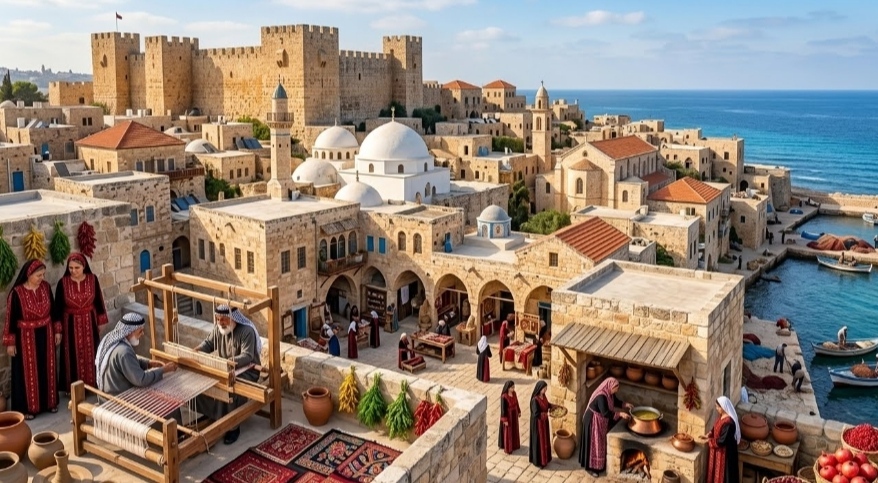
Where the Sea Carries the Memory of Civilizations
Perched along the Mediterranean coast in the southwestern corner of Palestine, Gaza has long stood as a historic gateway between Asia and Africa. For centuries, it served as a vital crossroads for trade caravans, empires, and travelers, making it one of the most strategically significant cities in the region.
Historical Landmarks and Living Heritage
Gaza holds within it the traces of countless civilizations, each leaving behind stories carved into stone and memory. • The Great Omari Mosque The oldest and most prominent mosque in Gaza, the Great Omari Mosque embodies the layered history of the city itself. The site once served as a pagan temple, later became a church, and was eventually transformed into a mosque — reflecting the succession of cultures and faiths that passed through Gaza over the centuries. • The Church of Saint Porphyrius Among the oldest churches in the world, this sacred landmark stands beside the Great Omari Mosque in a powerful image of coexistence and spiritual continuity. • Qasr al-Basha (The Pasha’s Palace) Dating back to the Mamluk era, this historic palace witnessed successive periods of rule and governance. Today, it serves as a museum preserving Gaza’s rich historical legacy. • Al-Daraj and Al-Zeitoun Quarters These ancient neighborhoods, with their narrow alleyways, stone houses, and timeworn architecture, still carry the scent and rhythm of old Gaza.
The Cuisine of Gaza — Bold, Earthy, and Unmistakable
Gazan cuisine is renowned for its vibrant flavors, especially its generous use of red chili and fresh dill, locally known as jaradeh. • Sumaqiyya Considered the queen of Gazan festive dishes, Sumaqiyya is prepared with sumac, tahini, meat, and Swiss chard, creating a deeply rich and tangy flavor unique to Gaza. • Qidra Ghazzawiyya (Gazan Qidra) A beloved traditional dish of rice, lamb, chickpeas, and garlic, slow-cooked in a copper pot inside a wood-fired oven. • Fukhariya A slow-cooked clay-pot dish made with meat or seafood, celebrated for its deep, smoky flavor and tender texture. • Rummaniyya A humble yet distinctive traditional meal made from lentils, sour pomegranate, and eggplant.
Traditional Dress and Textile Heritage
The traditional dress of Gaza — particularly the famed Majdalawi thobe — is celebrated for its elegance and meticulous craftsmanship. • Embroidery Gazan embroidery is distinguished by its vertical patterns and geometric motifs that adorn the sleeves and sides of the garment. • Colors The dresses traditionally feature black or white fabrics enriched with vivid red silk threads. • Fabric Historically, Gaza was renowned for its luxurious handwoven Majdalawi textile, once considered among the finest fabrics in Palestine.
The Spirit of Gaza
Gaza is far more than a place on a map; it is a testament to beauty shaped through endurance. Its lively markets, such as Souq al-Zawiya, its Mediterranean shore that serves as both refuge and breathing space, and its people — known for their generosity, steadfastness, and profound attachment to the land — together form the soul of the city. Gaza remains a city where history does not merely survive in monuments, but lives on in the everyday rhythm of its people.