Tulkarm: Where the Orchards Breathe Toward the Sea
A Palestinian City Draped in Citrus Groves, Railway Echoes, and the Grace of the Plains
The Loom of Land and Learning
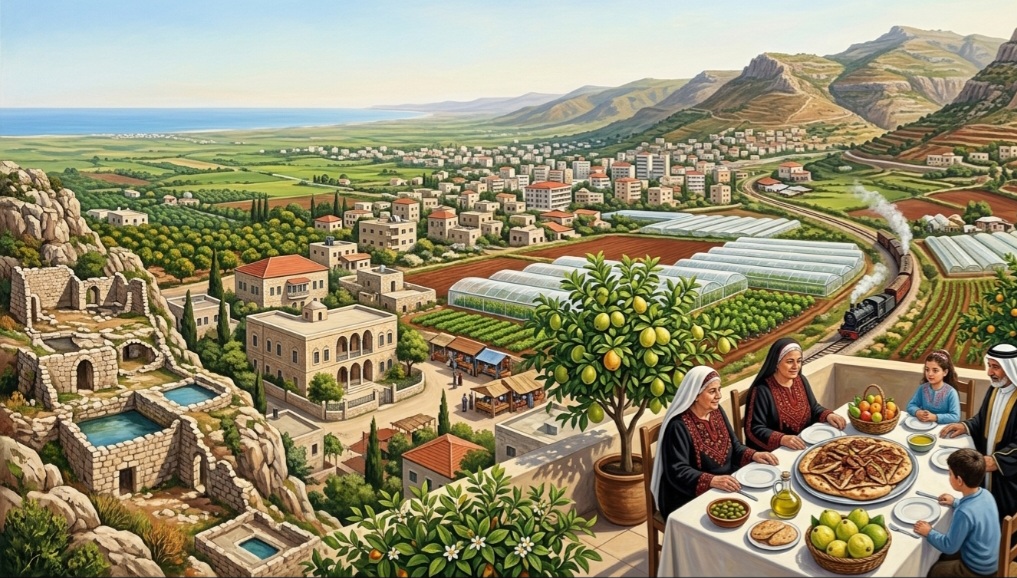
Tulkarm is a city that seems to rest gently between two worlds — cradled by fertile green plains while leaning against the distant hills. Here, the fragrance of orange groves mingles with the sea breeze drifting inland from the Mediterranean, giving the city an atmosphere unlike any other in Palestine. Often called “the City of Generosity”, Tulkarm has long stood as a historic gateway linking the Palestinian coast to the inland mountains, while also earning a reputation as a center of learning, cultivation, and refinement.
A Land Shaped by Fertility and Geography
Situated in the northwestern part of the West Bank, Tulkarm occupies a strategic meeting point between the mountains of Nablus and the coastal plain. Its rich red volcanic soil — among the most fertile in the region — transformed the area into a vast green basket of abundance, sustaining generations through agriculture and trade.
Echoes of History and Stone
• Khirbet Irtah Khirbet Irtah preserves traces of Roman and Islamic eras through its ancient shrines, archaeological remains, and historic water pools that continue to whisper stories from centuries past. • Tulkarm Archaeological Museum Tulkarm Archaeological Museum houses collections that trace the city’s layered history across successive civilizations and periods. • The Railway Line The remnants of the historic Hejaz Railway still stand as silent witnesses to the days when Tulkarm was connected to Damascus and Cairo, reflecting the city’s once-vital role in regional trade and travel. • The Saraya Building The Saraya Building remains one of the city’s most elegant Ottoman landmarks, having once served as the administrative and political heart of the region.
Craftsmanship Rooted in the Land
• Agriculture and Greenhouse Farming Tulkarm is widely known as a pioneer of protected agriculture and greenhouse cultivation. Its lands produce some of Palestine’s finest citrus fruits, guavas, and fresh vegetables, making the city synonymous with agricultural excellence. • Tailoring and Textile Work The people of Tulkarm became renowned for their skill in sewing, garment-making, and delicate embroidery traditions passed from one generation to the next. • Trade and Market Life Thanks to its geographic position as a crossroads between regions, Tulkarm developed into a lively commercial center known for its energetic markets and enduring culture of trade.
The Taste of Tulkarm
• Musakhan al-Karmi Musakhan holds a special place on the Tulkarm table — warm village bread soaked in pure olive oil, layered with onions and sumac, and traditionally served as a gesture of hospitality and honor. • The Guavas of Tulkarm No visit to Tulkarm is complete without tasting its celebrated guavas, whose fragrance drifts through the city streets and orchards alike. They are widely regarded among the finest in Palestine. • Traditional Family Dishes Meals such as maqluba and maftoul remain deeply tied to family gatherings and communal celebrations, carrying the warmth of Palestinian home life.
The Traditional Dress of Tulkarm
• The “Zamm” and “Mallas” Thobes The women’s dress of Tulkarm is admired for its understated elegance and simplicity. Traditionally crafted from black fabric, it is enriched with finely detailed hand embroidery that reflects quiet sophistication rather than extravagance. • Embroidery Inspired by Nature The embroidery patterns often draw inspiration from the surrounding landscape — grapevine leaves, lemon blossoms, and delicate floral forms — mirroring the fertility and softness of the land itself. • Men’s Traditional Attire The traditional men’s garments, including the qumbaz and the hattah, embody dignity, restraint, and the spirit of Palestinian generosity for which the city is known.
Where Citrus Winds Carry the Soul of Palestine
Tulkarm is more than a city of orchards and plains. It is a place where the scent of citrus still carries memories across the wind, where railway echoes linger in old stone walls, and where the generosity of the land continues to shape the soul of its people.