The Covenant of Oil and Za’atar: The Pact of the Earth and the Blessing of Heaven
A reading into the sanctity of the "dip" of Oil and Za’atar as a sovereign ritual linking Palestinians to their roots, where breakfast transforms into an act of belonging derived from the pride of the mountains.
Introduction: Morning Prayer at the Table
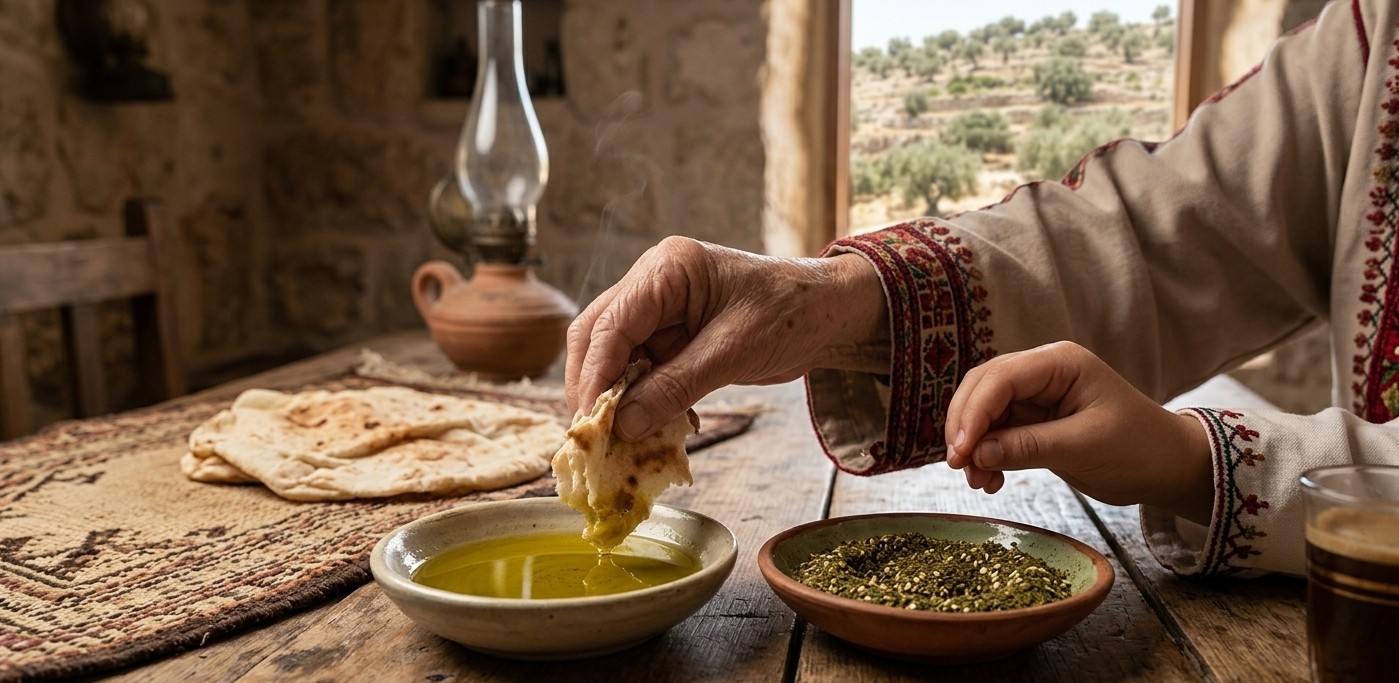
Before the clamor of the day begins, and as the first threads of sunlight touch the mountain ridges, the Palestinian table prepares to receive its two permanent guests. There, in the ancient clay dish, the "Green Gold" pressed from perennial olive trees meets the "Mountain Za’atar," dried and blended with the fragrance of steadfastness. This meal is not merely to stave off hunger; it is the "Opening of Blessing"—a daily ritual that begins with a piece of warm bread fresh from the oven, announcing the renewal of the covenant with the soil and identity.
A Dialogue of Wisdom: The Order of Blessing and Sovereignty
Within the "dip" of Oil and Za’atar lies a deep existential philosophy; we do not eat randomly, but follow a sacred path. We dip the bread in the oil first, as if baptizing the soul with the blessing of the blessed tree that inhabited the mountains before history. Then, we follow it with the Za’atar that sprouted in the crevices of the rocks to teach us resilience. This sequence is a tacit acknowledgment that the earth is the origin, that the oil is the substance preserving existence, while the Za’atar is the flavor that gives life its meaning and vigor. It is the meal of "Authentic Sovereignty"; the Palestinian who possesses their oil and za’atar is a free human being, never surrendering their will to anyone. The dish here is a daily "deed of ownership," and the morsel traveling from the plate to the mouth is a renewed confirmation that the mountain still grants us its sustenance, and that we remain the custodians and guardians of this grace.
The Role of Woman: The Pillar of Flavor and Guardian of Seeds
The Palestinian woman is the one who turns Oil and Za’atar into a story of survival. She is the one who oversees the "First Press" to ensure the oil is as pure as her heart, and she is the one who scales the mountains to pick wild za’atar leaves stone by stone, drying them in the shade and blending them with sumac and sesame with a magical touch inherited from grandmothers. She is the "Trustee" of the household's stores, knowing that the provision (Mouna) of oil and za’atar is the first line of defense during years of hardship. She is the "Architect of Awareness," planting the love of this tradition in her children, teaching them that those who find fulfillment in the bounty of their land shall never bow, and that the scent of za’atar on their clothes is the "perfume of belonging" that never fades. The woman here transforms the morning table from a mere breakfast into a school for instilling values of loyalty to the land and pride in identity.
Conclusion: The Unbroken Covenant
Reham realized that the dip of Oil and Za’atar is the "Binding Covenant" between her and her mountains; it is an inexhaustible blessing and an unwavering certainty that the earth that gave to our ancestors will give to us as long as we preserve its planting. This morsel will remain the strength of the patient, the sustenance of those marching toward the dawn, and the eternal witness that we are a people who dip our bread in dignity before oil. Grandmother Laila looked at her and said: "Whoever begins their day with the blessing of the mountain, their soul shall withstand the storms of time; for the Palestinian who dips their bread in the oil of their land is planting their roots deep into the heart of history."