Al-Awneh: The Epic of Hands and Hearts
An exploration of the philosophy of "Al-Awneh" as a sovereign social system reflecting the unity of Palestinian destiny, where hands unite during harvest and construction seasons to prove that true strength lies in the collective.
Introduction: The Call of the Land and the Rhythm of Hammers
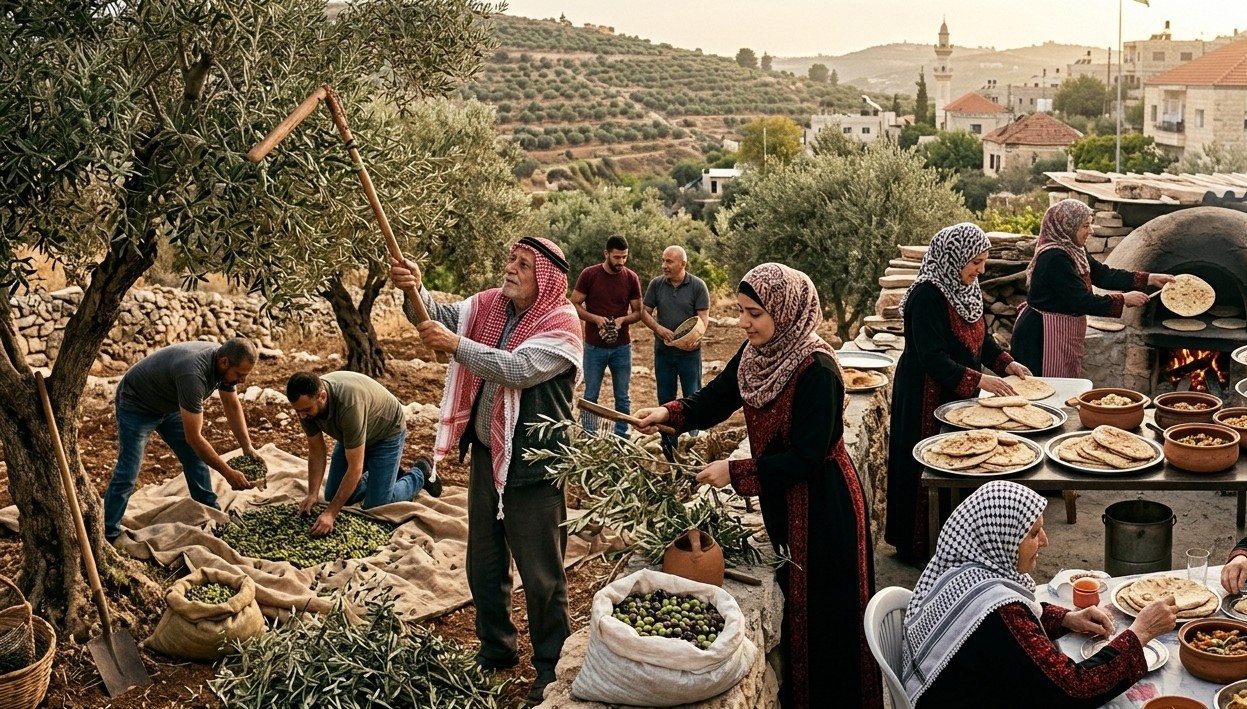
When the Muezzin’s voice rises to announce the start of the olive harvest, or when the first slab of a new house is ready to be poured in the village, the dawn silence is broken by an unwritten call, etched into the Palestinian genetic code: the call of "Al-Awneh." A Palestinian needs no formal invitation to stand in a neighbor’s field or support a rising wall; the time is the time for giving, the place is a testing ground for loyalty, and the air is charged with a communal spirit that dissolves individual fatigue into collective fervor.
The Philosophy of Awneh: Solidarity as an Act of Sovereignty
Al-Awneh is not merely technical assistance or free physical labor; it is an "organic philosophy of resilience" (Sumud). It is a deep-rooted popular realization that while an individual may break, the community is an oak forest that no wind can overcome. During Awneh, class and social barriers fall away; the doctor, the laborer, the engineer, and the farmer share the same hammer and the same loaf of bread dipped in oil beneath the trees. It is the system that has protected the Palestinian existence from fading. When houses are built by the hands of neighbors, the walls become more than just stones and mortar—they become a "collective covenant" to protect that space. Awneh is the grassroots response to fragmentation, transforming "work" from a burden into a festival of chants and heroism.
The Role of Woman: The Foundation of Resolve and Guardian of Sustenance
The Palestinian woman is the emotional and practical engine of the Awneh rituals. She leads the "kitchen battalions" to prepare Za'atar pies and Musakhan to fuel the men, and it is she who ignites the spirit of competition with her traditional chants (Maha-ha), turning exhaustion into pride. In Awneh, the woman is not behind the scenes; she is the "guardian of morale," ensuring that neither the resolve cools nor the food runs short. She is the "architect of awareness," teaching her children that "God's hand is with the collective" and that the dignity of the home is an extension of the village’s dignity. Through her presence, Awneh is transformed from a grueling task into a "national wedding" where identity and connection to the land are reaffirmed, proving that true sovereignty begins with a society’s ability to serve itself.
Conclusion: The Covenant Etched in Stone and Tree
"Al-Awneh" is the living document proving that Palestinians have never left their land to nothingness. It is a daily practice of sovereignty and dignity, and a constant reminder that strength is not measured by what you possess, but by what you give to those around you. The arms of Awneh will remain those that build, the eyes of the guardians those that protect, and the united hearts those that ensure survival. "The arms that intertwine during harvest and construction are the same that safeguard the land during trials; for those accustomed to supporting a neighbor's back will never bow before the storms of time."