The Kanoun Evening: The Warmth of Souls in the Embrace of Olive Wood
"The Kanoun Evening: When olive wood embers become the family’s companion during winter nights; documenting the Palestinian rituals of warmth that blend the roasting of chestnuts with the ancient tales of ancestors."
Introduction: The Ritual of Fire and Serenity
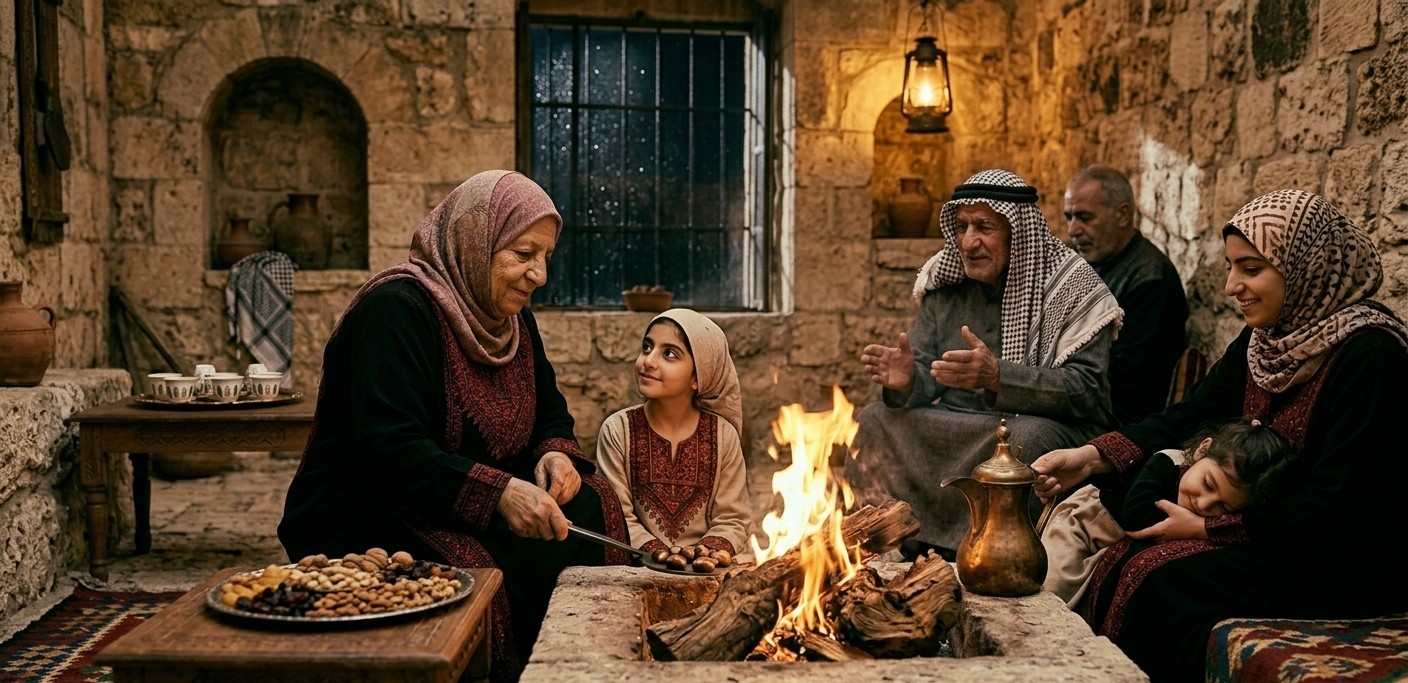
When the wind howls outside and raindrops drum against the stone windows, everyone retreats toward the center—toward the Kanoun (the brazier). There, where the flames of olive wood dance with an unmistakable scent etched in memory, a special kind of evening begins. It is not merely a means of heating, but an "emotional tent" built every night, gathering young and old in a circle of familiarity, where the winter chill melts away in the heat of the gathering.
The Essence of the Kanoun: Ripening Stories on Low Heat
On the edges of the glowing embers, chestnuts line up, waiting their turn to ripen, much like the stories ripening in the hearts of the elders. As Ruqayya watched the shifting colors of the coals, she realized that the Kanoun has a "silent language"; it compels everyone to leave their screens and look toward the faces of their grandfather and grandmother. Waiting around the fire is a school of "deliberation." The sound of chestnuts cracking and the scent of bread toasting on the metal stand are the musical preludes that open the doors of memory. In this evening, time is not measured by hours, but by the number of chants and stories told, and by the copper teapot boiling over the embers to serve Sage tea with that incomparable "wood-fire flavor."
The Role of Woman: The Guardian of Fire and Architect of the Bond
The Palestinian woman manages this "winter festival" with wisdom and calm. She is the one who carefully selects the dry olive wood to ensure a fire untainted by excessive smoke, and she who prepares the "nibbles"—dried figs, almonds, and walnuts—to complete the gathering. She is the "Guardian of Warmth," ensuring the Kanoun stays lit with love before wood. She is the "Architect of Awareness," seizing these hours to plant the history of the land in her children’s hearts through the Kharifiyya (folk tales). The woman here transforms the Kanoun from a household tool into a "cultural platform," passing down the grandmothers' commandments and the secrets of resilience, affirming that a home where the Kanoun burns at night is a home fortified against alienation and forgetfulness.
The Core of Wisdom: Olive Embers Never Sleep
The grandmother said, slowly stirring the coals with the iron poker: "My daughter, olive wood is like its owner; patient, its fire is warm, and its embers stay awake until morning. My dear, the Kanoun is what brings everyone together. A house with no fire has a chill in the hearts, not just the bones. Learn, Ruqayya, that dignity is like this Kanoun; it needs someone to feed it and guard its embers to keep the cold away from the home."
Conclusion: The Covenant Written in Ash and Certainty
Ruqayya realized that the Kanoun evening is the "winter pact" that binds generations together; the stories told around the fire remain engraved in the soul more deeply than those read in books. We are a people who craft our warmth from our trees, protect our identity with the tales of our ancestors, and believe that sitting around the Kanoun is the truest expression of a shared destiny. The grandmother concluded her talk as she distributed the roasted chestnuts: "My dear, he who finds fulfillment in the tales of the Kanoun in his youth will never lose his way in the paths of the world; so be the embers that warm the hearts, and the story that never ends."