The Haven of Safety: The Essence of Mouna and the Covenant of Self-Sufficiency
"Home Provisions (Mouna): When neatly arranged jars transform into treasuries of blessing and tranquility; documenting the essence of stewardship that stores the summer sun to face the winter chill."
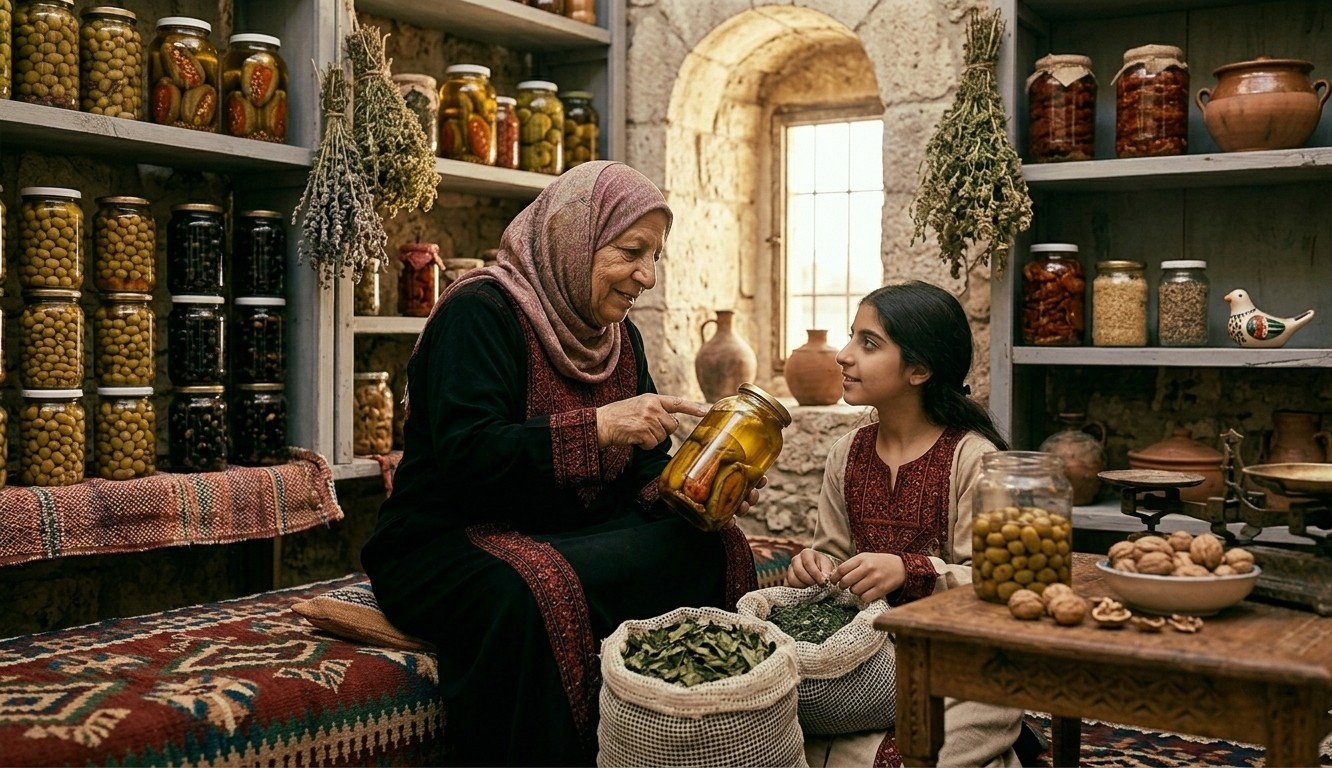
Introduction: The Fragrance of Tranquility in the "Pantry"
As the sky begins to paint its first clouds and the signs of a long winter loom on the horizon, a sense of serenity mixed with pride pervades the Palestinian home. Its source is not just the stone walls, but that distant corner known as "Bayt al-Mouna" (The House of Provisions). There, where jars stand in rows like "deposits of the earth" hidden for times of need, the scent of thyme and olive oil wafts through the air, announcing that the home is ready to face the wind. In Palestine, Mouna is not merely food storage; it is the "safety of the soul" and the valve of family stability when the rains pour.
The Essence of Mouna: A Struggle Against Want
In the collective memory, Mouna is a school of preparedness. Ruqayya realized, while contemplating the colors of the jars, that each one is a story of struggle; Makdous and olives are the pillars and support of the home. Waiting for these deposits to ripen is a lesson in "patience"; for dried goods like figs, okra, and molokhia are nothing but the summer sun stored by women to shine during the cold of January.
The Star of the Craft: The Core of "Earth’s Deposits" and How They Are Formed
Methods of Mouna vary by crop, but they all meet in the "soul" (Nafas) and precision of the maker:
- Makdous: Small "Battiri" eggplants are lightly boiled, then salted and placed under a heavy stone weight for two days to expel all the water from their hearts. They are then stuffed with walnuts, garlic, and red chili paste and submerged in olive oil.
- "Muraṣṣa‘" Olives (Cracked Olives): Each olive is hand-cracked to release its bitterness, then soaked and preserved in a brine solution balanced by the "egg test," alongside lemon slices and hot peppers, remaining as a staple that adorns the table all year round.
- Dried Goods (Molokhia and Okra): The pieces are carefully cleaned and spread on white sheets under a deep shade or warm sun until completely dry. This greenery transforms into "golden provisions" to be cooked during the harshest, coldest days of the Murbaniyah (the peak of winter).
The Role of Woman: The Architect of Safety and Guardian of the Harvest
The Palestinian woman is the actual engine of this epic. She decides when the fruit is picked and when it is dried, overseeing the "symphony" of collective labor where relatives and neighbors gather in circles to peel garlic or press olives. She is the "Manager of Safety" who transforms summer toil into psychological comfort that envelops the family when the snow falls. She plants love in every jar, affirming that Mouna is an "overflow of love," armed with blessing and defined by loyalty to the soil.
The Core of Wisdom (Grandmother Laila’s Saying):
My daughter, Mouna is the cover (Sutra) of the home. A house that has oil and Mouna has a corner of Paradise within it; the rain does not frighten those who have filled their treasury with the bounty of their land. Learn, Ruqayya, that Mouna is not just for eating; it is the 'prestige' of the family and its ability to remain steadfast. For the hand that reaches for its own Mouna never has to reach out to people."
Conclusion: The Covenant Written in Oil and Certainty
Ruqayya realized that Mouna is the pact that binds us to the land and its seasons. The sound of boiling jam and the image of regularly lined jars are the truest scenes of stability. We are a people who store the sun in our vessels and face winter with tranquil hearts, believing that blessing dwells in homes that honor their harvest and save the white light of their struggle for a rainy day. "May your home remain full of goodness and Mouna, and may God preserve the blessing in both the little and the much; for he who sows loyalty, reaps safety."