He Who Eats with His Own Teeth Benefits Himself
How an Old Palestinian Saying Warns Against Living Dependent on the Promises of Others
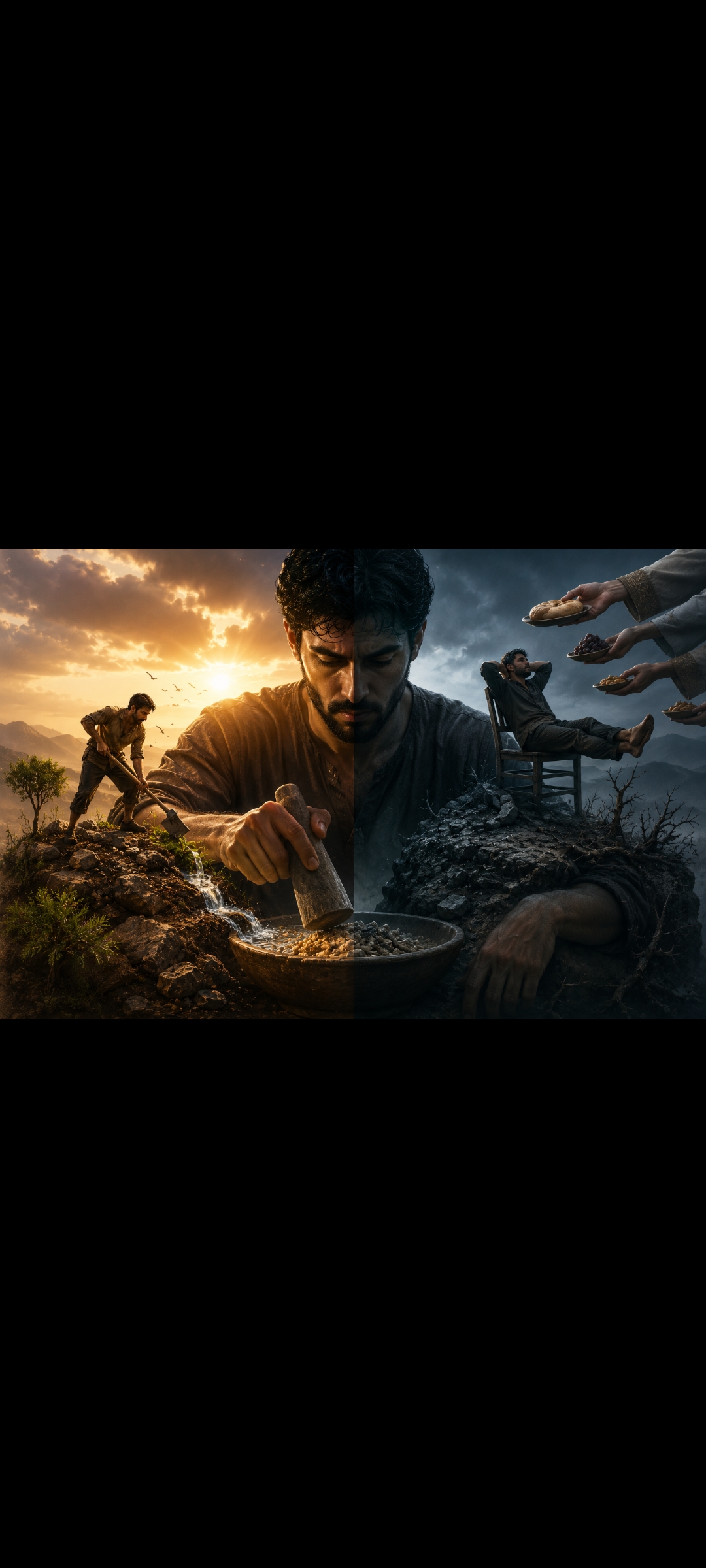
He Who Eats by His Own Tooth Benefits Himself
This old Palestinian proverb carries a powerful call for self-reliance and personal responsibility. The “tooth” in the saying symbolizes one’s own effort and ability — the tool with which a person chews and feeds themselves. The deeper meaning is simple yet profound: The person who works with their own hands and relies on their own strength is the one who truly benefits and finds satisfaction. But the person who waits for others to feed, rescue, or sustain them remains forever dependent on other people’s moods, circumstances, and willingness to help. In Palestinian culture, the proverb is often used to encourage independence, perseverance, and dignity through honest labor.
Story: The Stranger’s Land
Two Brothers, Two Paths Abu Ibrahim had two sons: Ibrahim and Kamal. When he passed away, he left them two neighboring plots of land along the mountainside. Ibrahim lived by his father’s words: “My son, no one scratches your skin better than your own fingernail.” From the earliest hours of the morning, Ibrahim carried his axe into the fields. He plowed the earth with his own hands and broke stubborn rocks beneath the sun. Every evening he returned home exhausted, his palms cracked and his face burned by heat and dust — yet he smiled whenever he saw the first green shoots pushing through the soil. Kamal, however, despised hard labor. He spent his days sitting in the village café, waiting for help to arrive from somewhere else. Sometimes he searched for laborers willing to work on credit; other times he depended on relatives to plow his land for him. “We are family,” he would always say confidently. “They won’t leave me alone.”
The Year of Drought
Then came a year of severe drought. Resources grew scarce throughout the village, and every household became consumed with its own survival. When harvest season finally arrived, Ibrahim’s land remained abundant despite the harsh year. Because of his effort, he had dug a small well himself and prepared the soil carefully long before the drought began. Kamal’s land, meanwhile, had become overrun with thorns and weeds. The workers he waited for never came. The relatives he depended upon had become busy saving themselves.
The Harvest of Effort
Kamal stood silently before his ruined field, watching his brother carry sacks of wheat across the hillside. With sorrow in his voice, he asked: “My brother… why did nobody help me? I asked our cousins and neighbors, but everyone said they had their own problems. Did they truly leave me to starve?” Ibrahim placed his hand gently on his brother’s shoulder and replied with the honesty of someone who still cared: “Kamal… relatives have their burdens, and neighbors carry worries of their own. In hard times, no one will plow your land for you.” Then he looked toward the field and continued: “You sat waiting for the hands of others and forgot the old saying: ‘He who eats by his own tooth benefits himself.’ I worked alone, and today I alone can feed my children from the sweat of my own brow.”