The Handmade Doll Beneath the Olive Roof
How scraps of fabric became childhood companions stitched with memory, affection, and heritage
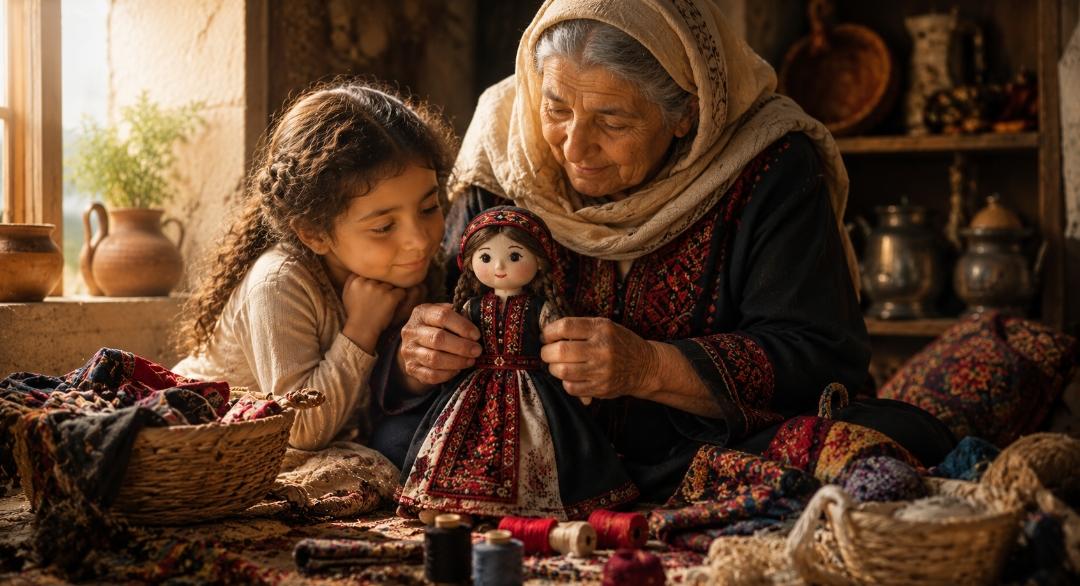
Warm Stories Resting in Children’s Arms
Scraps of Fabric and Stories of Love The cloth doll, lovingly known in many Palestinian homes as the bride doll, is among the oldest toys remembered in Palestinian childhood. More than a plaything, it became a symbol of tenderness, care, and the spirit of home, carefully crafted by mothers and grandmothers to accompany a child’s earliest dreams.
Emotional Meaning and Cultural Value
In earlier generations, dolls were rarely bought from shops. They were handmade from leftover fabric saved after sewing clothes, reflecting the household wisdom of reuse and resourcefulness that shaped Palestinian family life. Just as children once built wire carts from discarded materials, cloth dolls emerged from simple remnants transformed by creativity and affection. Each doll carried the scent of the home and the warmth of the hands that stitched it together.
Materials and the Art of Making the Doll
The beauty of the cloth doll lay in its simplicity and in the imagination behind it. Its body was sewn from pieces of white or colorful fabric, then filled with cotton, wool, or small scraps of cloth. The facial features were embroidered carefully with colored thread, while old buttons were sometimes used as eyes. Many dolls were dressed in miniature versions of the traditional Palestinian embroidered dress, allowing children to grow up connected to their cultural identity and heritage through play itself.
Educational and Social Dimensions
The cloth doll played an important emotional role in childhood. Through it, young girls often expressed care and responsibility by imitating the role of a mother, gently nurturing and protecting their dolls. Designing tiny garments for the dolls also became an early introduction to sewing and embroidery, passing traditional skills from one generation to the next. The dolls were often given the names of relatives or family members, strengthening emotional bonds within the child’s imagination and daily life.
Symbolism in Palestinian Memory
The cloth doll came to symbolize simplicity and contentment. While games like mancala sharpened calculation and riddles trained the mind, the cloth doll nurtured emotion, tenderness, and imagination. It stood as a reminder that beauty handcrafted with love could create happiness far beyond anything bought or manufactured.
A Living Heritage Scene
Imagine a quiet corner of an old Palestinian home. A grandmother sits beside a basket filled with colorful scraps of fabric, while a little girl watches with shining eyes as those scattered pieces slowly become a beautiful doll with woolen braids and an embroidered dress. It is the same wonder children once felt while watching spinning wooden tops whirl through the village courtyard — a simple moment transformed into memory, belonging, and joy.