Palestinian Riddles and the Firelight of Old Evenings
A journey into the riddles that shaped memory, intelligence, and storytelling across generations
Palestinian Riddles The Glow of Intelligence in Evening Gatherings
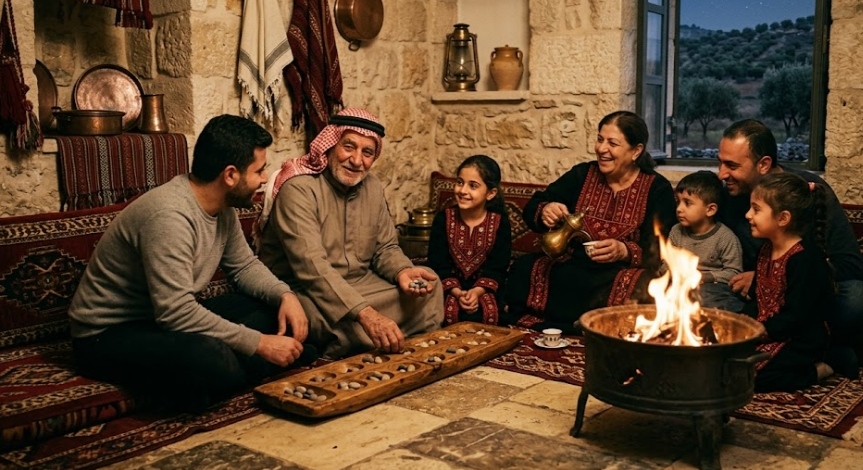
• Songs of the Mind Palestinian riddles were far more than playful questions asked for amusement. They formed an essential part of the cultural memory of Palestinian society, serving as mental exercise, a test of quick thinking, and a celebration of wisdom. During long winter evenings, riddles accompanied games like mancala around the warmth of the kanoun, the traditional coal heater. Families gathered together while the scent of firewood mixed with bitter coffee, and gentle battles of intelligence unfolded between grandparents, parents, and children.
Cultural and Educational Value
Riddles became a natural school for passing knowledge from one generation to another. They enriched the imagination by encouraging listeners to search carefully through the details of nature and village life in order to discover the answer. Palestinian riddles also reflected the beauty of spoken language, often relying on rhythm, poetic phrasing, and vivid imagery inspired by the surrounding environment. Most importantly, they created a bridge between the wisdom of elders and the curiosity of children, preserving memory through conversation and laughter.
Themes Drawn from Daily Life
The riddles of Palestine emerged directly from the rhythm of ordinary life. They spoke of clay ovens, coffee mortars, lanterns, and oil lamps found inside old homes. They drew inspiration from olives, pomegranates, wheat fields, rain, stars, shadows, and the changing sky. Everything surrounding the farmer and the village became material for imagination and wordplay.
The Art of Asking the Riddle
A riddle was never delivered casually. It carried its own style and atmosphere. The speaker would often begin with playful expressions meant to attract attention and spark curiosity before presenting the puzzle itself. Whoever solved the riddle was admired for sharp intelligence and quick understanding, often earning applause and cheerful praise from everyone gathered around.
Symbolism and Deeper Meaning
Just as the mancala board symbolized balance, planning, and the careful distribution of resources, riddles symbolized mental alertness and thoughtful reflection. For Palestinians facing hardship throughout generations, riddles became a subtle way of training the mind to look beyond appearances, analyze patiently, and search for hidden meaning before reaching conclusions. Together, riddles and traditional games helped shape the intellectual identity of Palestinian society.
A Living Heritage Scene
Imagine an old winter evening inside a traditional Palestinian home. The elders sit with dignity around a carved wooden mancala board. Children watch carefully as the stones move from one hollow to another. At the same moment, the grandfather asks a difficult riddle that suddenly fills the room with thoughtful silence. Numbers, words, wisdom, and laughter blend together in one unforgettable scene.
Riddles from the Spirit of the Land
• The First Riddle “Something no bigger than a palm, yet it holds a hundred thousand.” The answer is the pomegranate, with its countless seeds gathered tightly together. • The Second Riddle “A bowl that rings like metal, dives deep into the sea, pearls within and copper outside.” Again, the answer is the pomegranate, describing its rich interior hidden beneath its firm outer skin. • The Third Riddle “Whiter than snow and blacker than الفحم.” The answer is writing itself: black ink resting upon white paper, or the contrast between night and day.