Copperware: The Resonance of Metal in the Ancient Markets of Jerusalem
"A journey into the philosophy of 'Taming the Solid'; where Jerusalem's artisans transform silent metal sheets into living masterpieces, etched with patience and polished by fire."
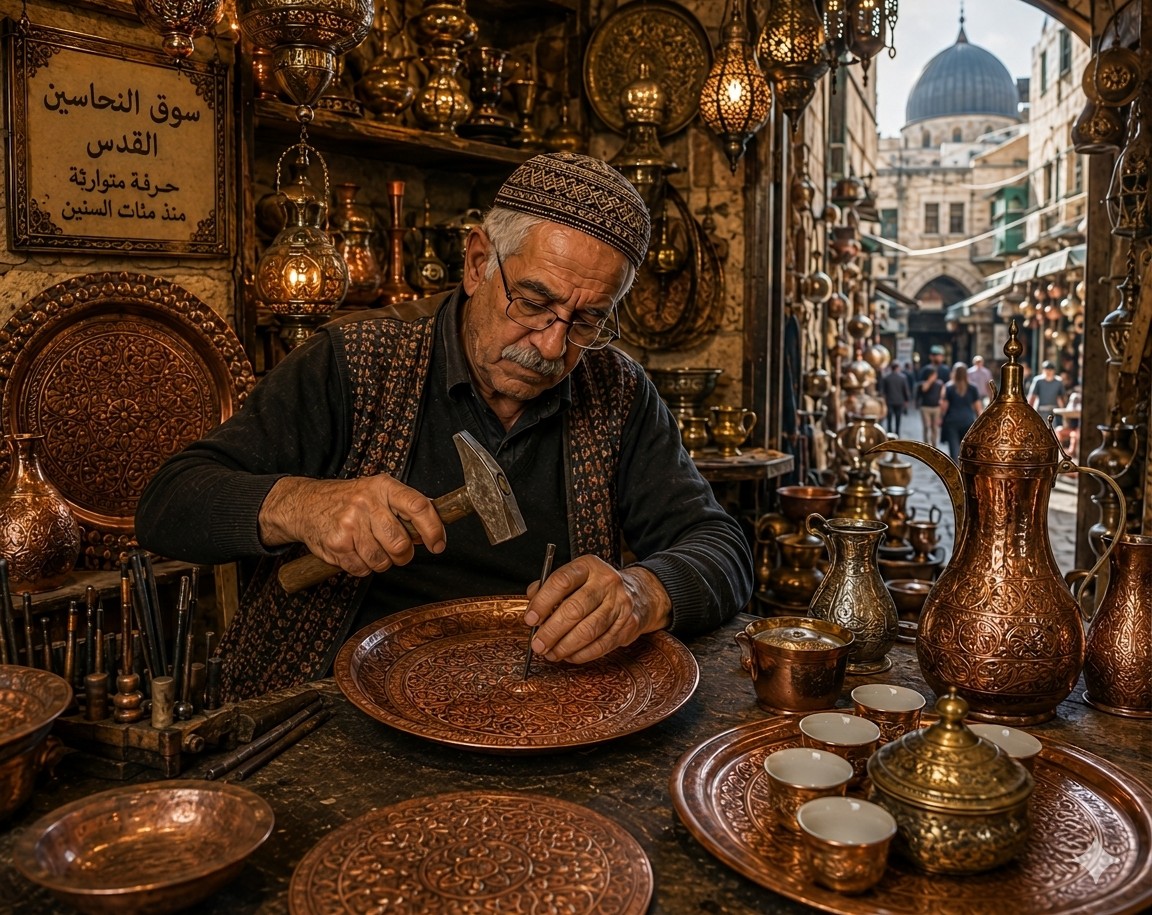
The Philosophy of Taming the Solid
The story begins with the philosophy of "Taming the Solid"; copper in Jerusalem is not just a cold metal, but a memory polished by fire and carved with patience. It is the craft that transforms silent metal sheets into vessels that pulse with life, their resonance echoing through the city’s alleys like an unending daily symphony. Copperware is the unique balance between strength and beauty—much like the Kufiya, which asserts its majesty while remaining soft to the touch, witnessing our steadfastness upon this land.
Inside the Workshops of the Old City
In the shops of ancient Jerusalem, copper is not measured by its weight, but by the "Precision of the Strike." Here, time passes through the tip of the "Chisel." The artisan spends long hours engraving motifs on the waist of a Dallah (coffee pot) or the face of a tray, granting the metal an undying soul and a value that only increases as the years go by.
I. From Sheet to Masterpiece: The Methods of Shaping(Behind every copper piece lies a grueling journey that begins with a flat sheet and ends as a work of art, through three primary methods mastered by Jerusalemites:)
- Hammering and Pressing: The copper is heated until it becomes malleable, then the artisan begins continuous "hammering" with heavy mallets on an iron anvil to bend the edges and shape the body (such as Dallahs and pitchers).
- Engraving and Carving: Once the piece takes its final shape, the stage of drawing with a chisel and a light hammer begins. Floral and geometric patterns are carved with extreme precision. Often, these carvings are filled through "Takfeet" (inlaying copper with silver or gold wires) to enhance its value.
- Whitening (Tinning): Since copper reacts with food, vessels undergo "whitening." The interior is wiped with a thin layer of pure tin to protect it and give it a bright silver color—a craft once performed by the wandering "Whitener" who roamed the streets of Jerusalem.
II. From Fragrant "Dallahs" to Decorative Icons
Historically, copper was linked to the "Dallah" that never leaves the fire, and the brilliance of the lanterns that illuminated the sanctuaries of knowledge. Today, copper returns to lead the aesthetic scene in contemporary homes; from mirrors framed in intricately worked copper to lanterns that grant a space a warmth that modern lighting cannot provide. It is the craft that has managed to stay "shiny" in the face of industrial dust, proving that what is hand-hammered with sincerity retains a loud resonance and a lasting impact.
The Star of Wisdom (In the Words of Grandmother Laila)
Grandmother Laila wipes an old copper tray with a soft cloth, looking at its brilliance before turning to Ruqayya, saying: "My dear Ruqayya, look at this copper... every time it shines, it reminds us of our origin. Copper, my daughter, is like kind souls; the more the days hammer at them, the more their strength and brilliance increase. My child, a house with the resonance of copper is a house of prosperity and noble roots. Cherish these pieces, my dear, and know that he who preserves the 'strike' of his ancestors will never lose his voice in the crowd. Be like this copper: solid in hardships, and radiant in joy." And when you are far from Damascus Gate and the noise of the Copper Market—place a piece of copper on your table. When the sunbeams touch it and it glows, you will know that the resonance of Jerusalem reaches you wherever you are, without a travel ticket.
Conclusion
Owning hand-worked copper is a celebration of the sound of hammers that has not gone quiet in Jerusalem for thousands of years, and a tribute to the fingers of artisans who "tamed" the metal and "engraved" our story upon it. While the world settles for silent vessels, Jerusalemite copper remains the "resonance" that binds us to our roots and the sparkle that tells us our metal is noble and rust-proof. Copperware is still enduring.