Pottery and Clay: The Loyal Earth of the Homeland
A journey into the philosophy of the first creation; where Palestinian clay blends the four elements—earth, water, air, and fire—to craft timeless vessels that witness our eternal bond with the land."
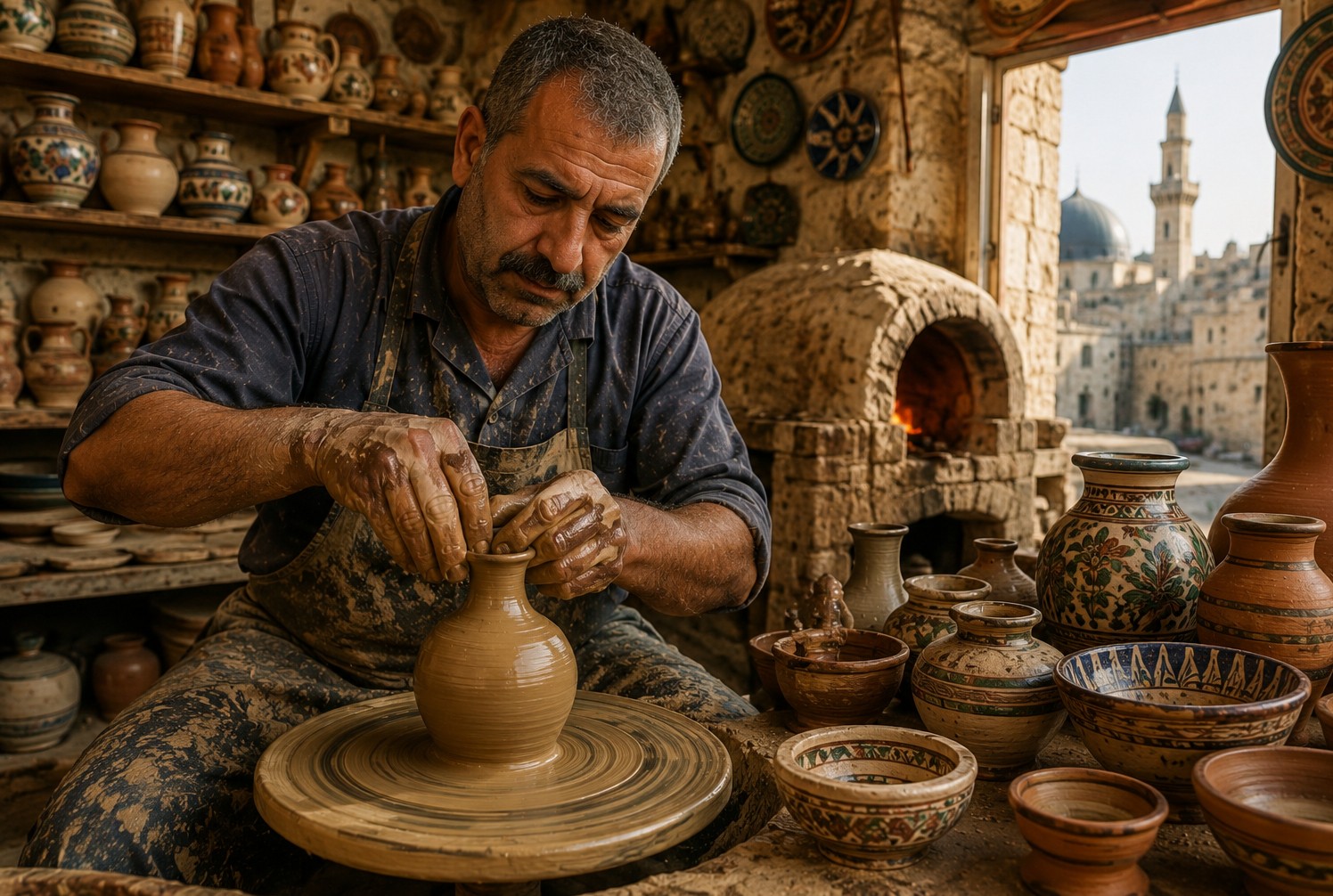
The Philosophy of the First Creation
The story begins with the philosophy of the "First Creation"; pottery in Palestine is not merely a vessel, but a profound confession that we are from this clay, and to it, we return. It is the craft that merges the four elements: the dust of the earth, the water of the spring, the air of the homeland, and the fire of defiance. When an artisan places his hand on the clay, he is not just shaping a pot; he is redefining our relationship with survival. Pottery is the stunning balance between the majesty of the raw material (Authenticity) and the versatility of modern design (Modernity)—just as the Kufiya commands respect when it shines in global forums as a symbol of origin and pride.
A Symphony of Motion and Scent
In the "Fakhoura" (pottery workshop) of Hajj Nasser in Hebron, or the ancient workshops of the "Daraj District" in Gaza, you feel time spinning with the pottery wheels. Here, there is no need for a compass; the scent alone guides the way. The smell of wet clay is the clock that sets the artisan's pace, where the noise of the outside world fades, replaced by the sound of hands frictioning against clay—a silent symphony rising from the heart of the earth to settle in our homes.
I. The Dance of Fingers: The Secret of Hebronite and Gazan Clay
In Hebron, pottery is distinguished by a sturdiness that resembles its mountain rocks, and by colorful decorations reflecting the brilliance of Qashani and glass. In Gaza, however, pottery is the tale of "the earth's clay" that leans toward warmth, where the "Qidra" and "Zayr" (water jars) are crafted to be the guardians of cool water and the taste of authenticity. The artisan here does not rush the fire; he knows that clay requires "long breath" inside the kiln to solidify and transform from mere dust into a masterpiece that resists extinction. Here lies the truth: no two pieces of pottery are exactly alike—just as the fingerprints of memory in our hearts never match.
II. From the "Zayr" to the Gallery: Renewed Heritage
Pottery has historically been linked to the essentials of the Palestinian home; from the "Musakhana" (clay oven) where food matures over a gentle fire, to the "Quwwar" (planters) cradling jasmine flowers on balconies. Today, this clay dons a modern robe; pottery hospitality sets appear in "Minimalist" designs suited for the finest modern tables, yet they retain the texture of the earth that the hand cannot mistake. It is the craft that crossed from grandmothers' kitchens to fine art galleries, proving that "clay" is the only metal that never rusts.
The Star of Wisdom (In the Words of Grandmother Laila)
Grandmother Laila adjusts her posture, wiping an old clay jar with a damp cloth, then turns to young Reham, saying: "My dear Reham, learn from pottery that those whose roots are in the earth’s clay never betray. Look at this jar—how much water it has held and how many days it has seen, yet it remains steadfast and cool. New dishes, like 'Tefal and glass,' break and vanish, but if pottery breaks, its scent lingers in the place. Cherish the clay of your land, my dear, and know that the hand that can knead clay to bring out beauty is a hand that knows how to build a nation. Be like this pottery: authentic, warm, and unchanged by the fire."
Conclusion
The presence of pottery in the corners of your home is not just a choice of passing decor; it is an evocation of the majesty of the earth that refuses to be tamed by machines. It is the due salute to the fingertips of "Hajj Nasser" and his companions, who plunge their fingers into the heart of toil to bring us a beauty that delights the beholder. While the world drowns in the coldness of plastic products, clay remains the covenant written in fire and water—the honest witness that we are holding onto our soil until the very end. Pottery and clay are still enduring.