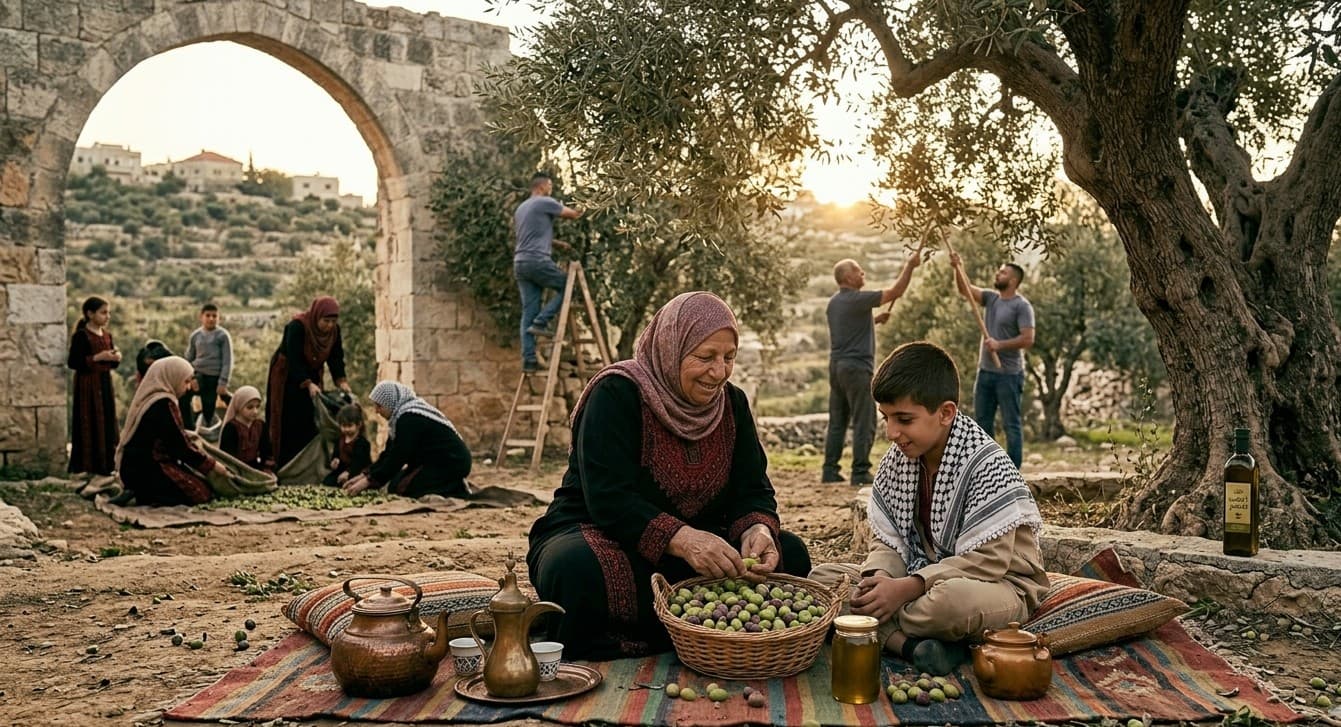
Musakhan: Master of the Table and Crown of the New Oil
The Palestinian Musakhan: The Tale of the First Press and the Green Gold, where Grandmother Laila explains to her granddaughter Ruqayya the secret of the "Act of Heating"—a celebration of the land, the gathering, and the Master of the Table who accepts no rivals.
"Snap!"
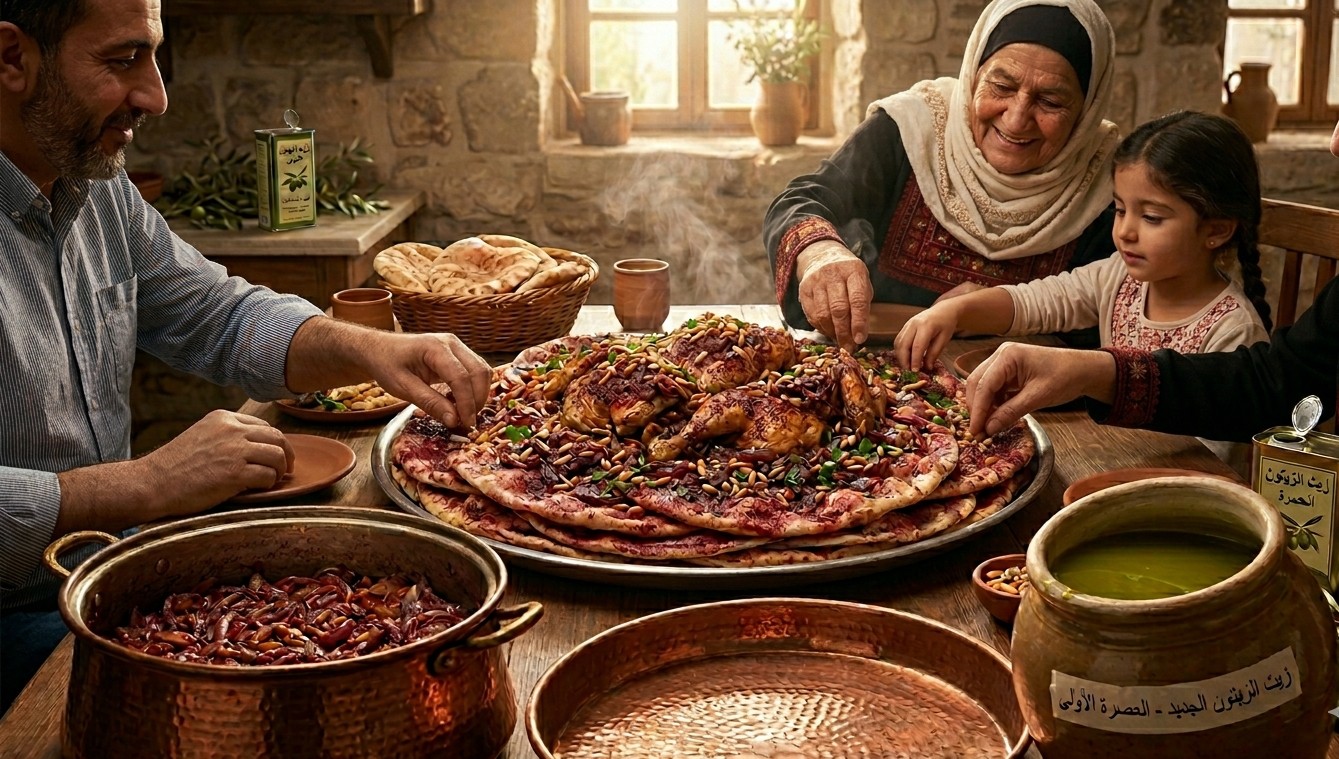
The seal of the tin container broke with a metallic ring that echoed throughout the house. In a single second, the aroma of the "First Press" exploded, occupying the kitchen. It was a potent, heavy scent with a pleasant peppery sting—the fragrance of land still drenched in the rains of October. The granddaughter stood watching the thick, green liquid pour into the pot like a silken waterfall. She reached for an old bottle of oil from the cupboard, but Grandmother Laila’s hand was quicker: "Stop, my dear! Musakhan accepts no rivals. This is the Master of the Table for the olive season, and it demands nothing but the new oil—still cloudy, with all its goodness intact."
The Secret of the Name: Why is it called "Musakhan"?
Ruqayya asked, brushing strands of hair from her face as the kitchen grew warm: "Grandmother, why is it called Musakhan? Why not any other name?" Grandmother laughed while tossing mountains of minced onions: "Look, my love, the name is simple, but behind it lies a great history. Long ago, farmers in the northern villages would bake Taboon bread in large quantities. To soften it and celebrate the new oil, they would 'heat' (Yusakhinou) the oil with onions and drench the bread in it." She continued, scattering the sumac: "The entire process relies on 'heating' the bread with the hot oil until it soaks up its soul. Musakhan isn’t just a dish; it’s an 'action'... we heat the oil to celebrate the olives, and we heat our hearts with the gathering."
History Hidden Between the Layers
"Tsh-tsh-tsh..." The sound of oil simmering with local sumac became the "music" of the room. Grandmother Laila added: "You know, my daughter, Musakhan is the authentic dish of the 'Fellah' (the farmer). In the past, chicken wasn't as common; the focus was entirely on the bread, onions, oil, and the wild sumac we gathered from the mountains. Over time, chicken was introduced as a way to honor guests, and it became the centerpiece that brings pride to the host."
Baptizing the "Taboon" in Green Gold
Grandmother pulled out the hot Taboon loaves and began dipping them into the pot of oil: "The loaf must swim, my dear... this bread was kneaded and endured the heat of the Taboon oven just to soak up our hard work from throughout the year. If your hand doesn't slide from the oil while you eat, it’s not true Musakhan!" She lifted a loaf, drenched in shades of crimson and green, spread it on the tray, and sprinkled toasted pine nuts that shimmered like gold over the top.
The Moment of Coronation: The Tray in the Center
The trays emerged from the oven, steaming and crackling, the deep red of the sumac striking to the eye. "Come, Ruqayya, call everyone... the Master of the Table accepts no separate plates, nor forks and knives. This is eaten with the hands and in a circle, so the scent of the earth stays clinging to our fingers." The young girl sat down, tore a piece of roasted bread, and realized that Musakhan isn't just a lunch... it is a "birth certificate" for the olive season, written with the farmers' sweat and sealed with the virgin oil that "heated" our homes with warmth.