Palestinian Christianity: The Living Heart of the Holy Land
From Bethlehem to Jerusalem, the story of Palestinian Christians is woven into the origins of Christianity itself and the enduring spirit of a people rooted in their land.
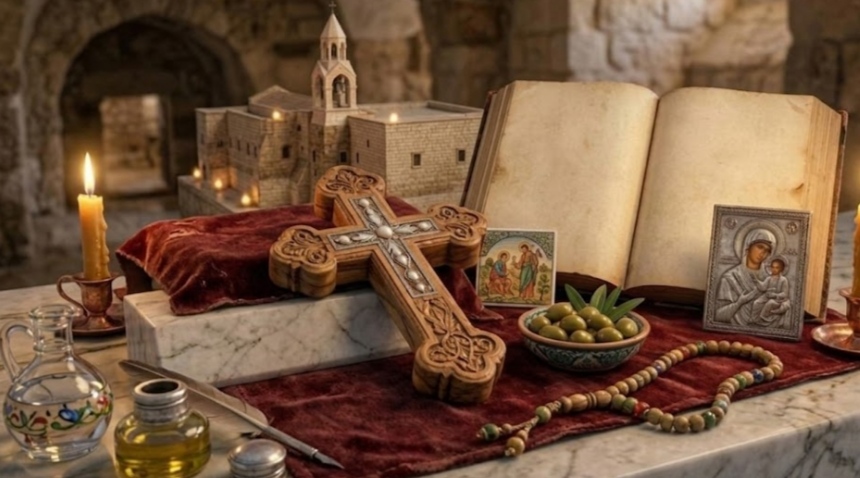
Christianity in Palestine
Palestine is far more than a geographical place. It is the pulse of history and the first cradle of Christianity, the land from which the message of love and peace reached the world. Here, the fragrance of sacred sites intertwines with the resilience of a people whose Christian communities have remained an essential part of Palestinian identity and national life for centuries.
The Cradle of Faith and Spiritual Roots
• The birthplace of the Christian message Palestine is the land where Jesus Christ was born, lived, and preached his message. From this soil, Christianity began its journey across the world. • Sacred landmarks of global significance The land is home to some of Christianity’s most revered holy sites, including the Church of the Nativity in Bethlehem, believed to mark the birthplace of Christ, and the Church of the Holy Sepulchre in Jerusalem, traditionally associated with the crucifixion and resurrection. • The “Living Stones” Palestinian Christians are often described as the “Living Stones” of the Holy Land — not as relics of the past, but as a living human and cultural presence that has endured continuously for nearly two thousand years.
Identity and National Belonging
• An inseparable part of Palestinian society Christians in Palestine are not an isolated community or a foreign minority. They are an integral part of the Arab and Palestinian social fabric, deeply connected to the land, its language, and its history. • National and intellectual figures Palestinian Christians have played influential roles in political, intellectual, and cultural life. Among the most prominent figures are Edward Said and Atallah Hanna, both recognized for their contributions to national and cultural discourse. • Educational and social institutions Churches and Christian institutions manage some of Palestine’s most respected schools, universities, and hospitals, serving Palestinians of all backgrounds without distinction. Institutions such as Bethlehem University have become symbols of education, coexistence, and national unity.
Existential Challenges and the Reality of Emigration
• The impact of occupation Christian communities are directly affected by the separation wall, land confiscations, and restrictions on access to holy sites in Jerusalem, all of which shape daily life and religious practice. • Economic hardship Political instability and limited economic opportunities have pushed many young Palestinians to seek a future abroad. • Demographic decline The Christian population in Palestine has declined dramatically — from around twelve percent in the early twentieth century to less than two percent today. For many, this decline raises fears that the Holy Land may gradually lose part of its indigenous Christian presence.
Resilience and Shared Community Life
Determination to remain Churches and local communities continue working to preserve the historic “Status Quo” arrangement that governs the holy sites while protecting the continuity of Christian life in Palestine. Shared national celebrations Religious occasions such as Christmas and Holy Fire Saturday have become national moments shared by Muslims and Christians alike, reflecting deep bonds of coexistence, solidarity, and collective identity in the face of hardship.
Generations of Faith and Memory
The story of Christianity in Palestine is not only a story of sacred places. It is the story of people who have carried faith, culture, and memory across generations while remaining deeply rooted in their homeland. In Palestine, Christianity is not preserved behind museum walls — it lives in the streets, churches, schools, and voices of the people themselves.