Eid al Fitr: The Sacred Joy That Follows Ramadan
A celebration where worship meets gratitude, and where faith is expressed through prayer, generosity, and shared happiness.
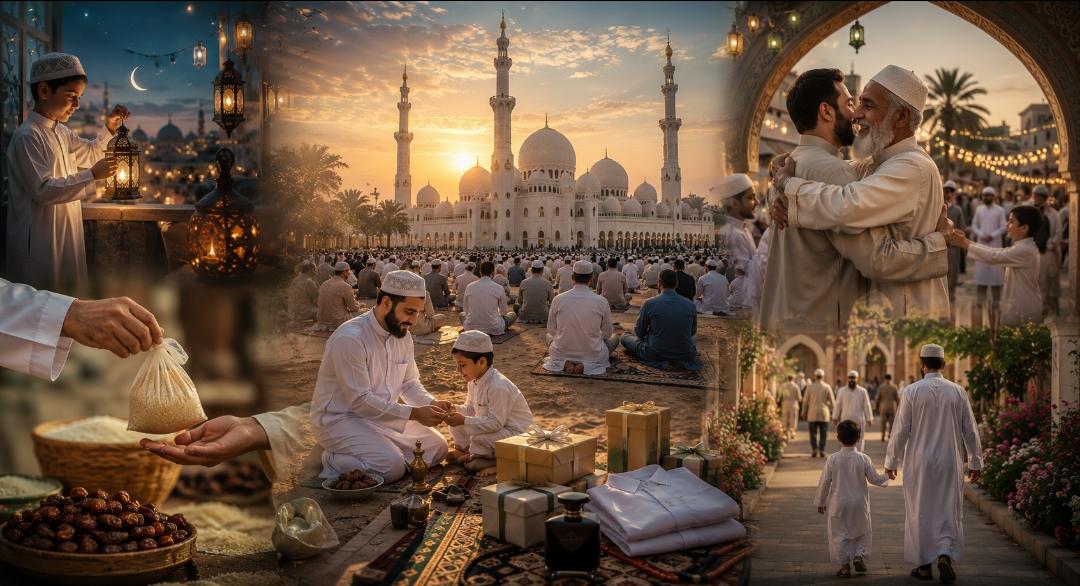
The Celebration That Crowns the Journey of Fasting and Prayer
Eid al Fitr arrives as one of the greatest blessings following the month of Ramadan. It marks the completion of fasting and nightly devotion, embodying gratitude, mercy, and spiritual fulfillment. More than a festive occasion, it is a sacred celebration deeply rooted in worship and communal joy.
The Takbir Glorifying God
The takbir begins at sunset on the final day of Ramadan and continues until the Eid prayer. Its words fill homes, mosques, and marketplaces as believers proclaim the greatness of God in gratitude for guidance and the completion of the holy month. The atmosphere of Eid often begins not with celebration alone, but with the powerful sound of collective remembrance.
Zakat al Fitr
Purification for the Fasting Soul Zakat al Fitr is an obligatory charity given by every Muslim before the Eid prayer, traditionally in the form of staple food. Its purpose is twofold: to purify any shortcomings that may have touched the fasting person during Ramadan, and to ensure that those in need can celebrate Eid without hardship or humiliation.
Cleansing and Wearing One’s Best
Part of the Prophetic tradition on Eid morning is to bathe before heading to prayer and to wear one’s finest clothing, whether new or carefully prepared. Men traditionally apply pleasant fragrances in honor of the sacred occasion, transforming personal preparation into an act of dignity and devotion.
Breaking the Fast Before Prayer
Before leaving for the Eid prayer, it is customary to eat an odd number of dates, often three, five, or seven. This simple act symbolizes the official conclusion of fasting and reflects obedience to the divine command to break the fast after Ramadan has ended.
The Eid Prayer
• A Gathering of the Community The Eid prayer is performed shortly after sunrise, usually in large open prayer grounds or central mosques capable of welcoming entire communities. The prayer consists of two units accompanied by additional takbirs, followed by a sermon reminding worshippers of gratitude, mercy, and the blessings bestowed upon them. • Taking Different Roads A cherished tradition of Eid is to walk to the prayer from one route and return by another. Beyond its symbolic meaning, this custom spreads the joy of Eid through the streets and allows more people to witness and share in the spirit of celebration. • Family Bonds and Words of Blessing Visiting relatives and strengthening family ties are among the most cherished acts during Eid. Homes open their doors to guests, greetings are exchanged warmly, and phrases such as “May God accept our good deeds and yours” carry both affection and prayer within them.
Joy Within the Spirit of Faith
Happiness on Eid is itself considered an act of worship. Families celebrate by giving gifts and Eid money to children, creating memories filled with warmth and excitement. Yet even in celebration, the spirit of Eid remains rooted in modesty, gratitude, and respect for the sacred values of the occasion.
A Renewal of Hearts
Eid al Fitr is not merely the end of Ramadan; it is the flowering of everything the holy month teaches. Through prayer, charity, forgiveness, and shared joy, Muslims welcome Eid with hearts renewed by faith and souls softened by devotion.