The Night of Al-Samir: The Neighborhood Theater Beneath the Stars
"On summer nights, the village square transforms into an open folk theater, where men compete in Zajal and improvised poetry under starlight, in the oldest form of Palestinian performance art that embodies community unity and the eloquence of the spoken word."
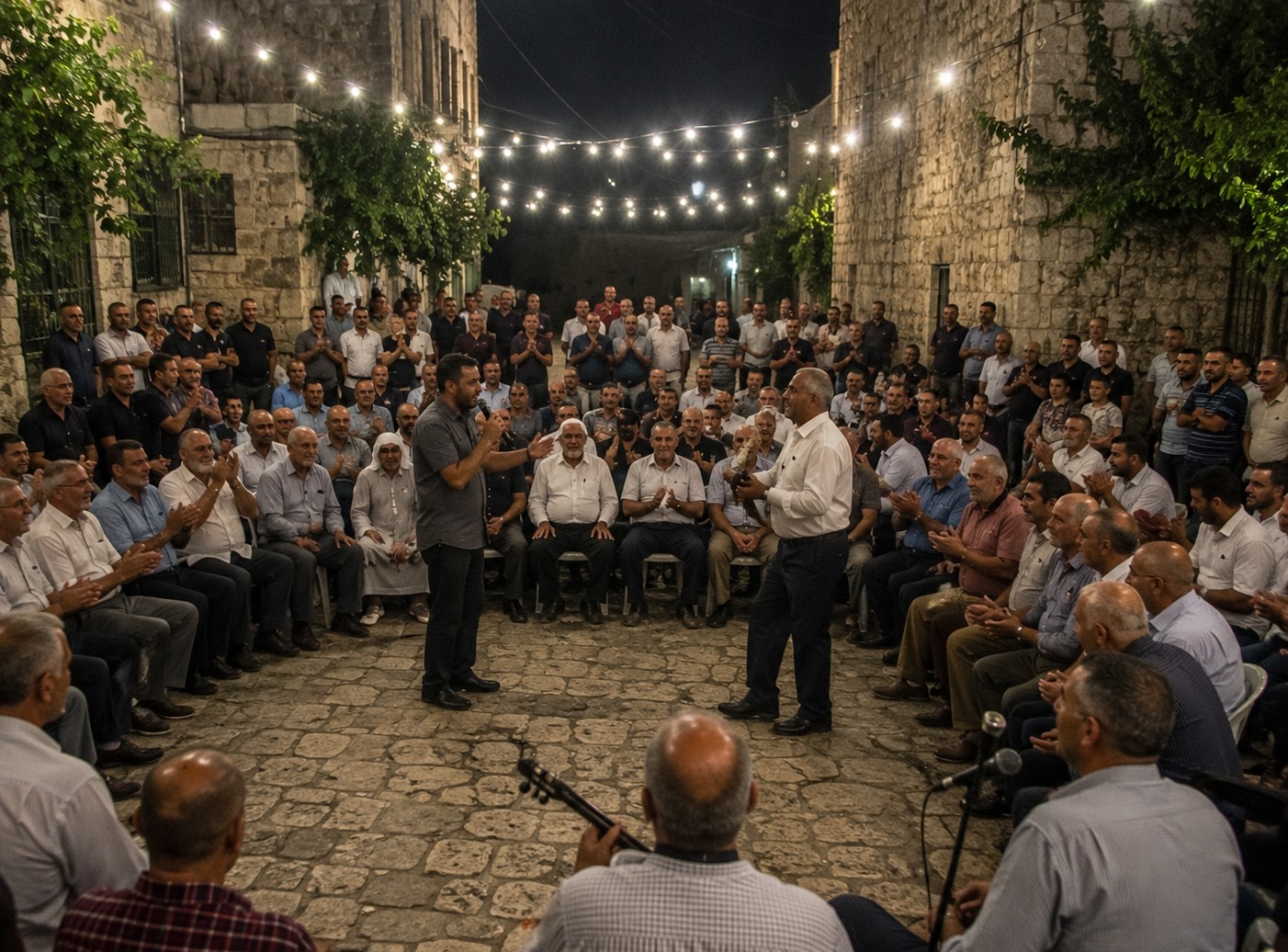
The Village Square… When the Night Speaks
Beneath a clear summer sky and in the heart of the village square, men gather, forming a majestic circle whose silence is broken only by the sound of powerful throats. Everyone watches eagerly as the night of Al-Samir begins, where there are no written texts, but rather improvisation born of the moment. Nearby, the portrait is completed by women watching the scene from behind ancient windows, exchanging smiles and comments on the skill of the Badda’een (improv poets). *Al-Samir: The oldest form of collective performance art in Palestine, relying on the gathering of people at night for singing, dancing, and poetic dialogue. Its secrets are only mastered by those who have lived its details and inherited its authenticity.
The Poetic Duel: The Sharpening of Minds and the Eloquence of Improvisation
During the night of Al-Samir, men compete in Zajal and improvised poetry, where two poets stand face-to-face in a "poetic provocation" (Mujakara) that showcases quick wit and powerful argumentation. This open theater is not merely a display of talent; it is a school for teaching generations the arts of rhetoric and pride in identity. Example of a "Poetic Provocation" in Al-Samir: First Poet (opens the square): "Welcome to you, O falcons of my homeland... O people of generosity, bounty, and glorification. We have come to sing, and loyalty calls within us... and Al-Samir tonight is honor and unification." Second Poet (replies with wit): "Welcome to the one who renewed my affection with his words... and my reply is like the sword and gunpowder. The square is our square, and injustice shall vanish... and we are the truest soldiers to the soil of this land."
A Dialogue of Wisdom: "Al-Samir is the Scale of Men"
Grandmother Laila sat near the window overlooking the square and said to her granddaughters: "My daughters, Al-Samir in our country isn't just staying up late; it is a scale for men. The one who can shake the square with his words is the one who possesses prestige." She continued, pointing to the circle of men: "Look how everyone listens and how silence falls when the Zajal begins. This art is what keeps our history and stories alive, passing from tongue to tongue under the moonlight."
Social Significance: The Open Folk Theater
- 1Community Unity: Al-Samir represents a state of cohesion, where everyone participates in responding to the poet or in unified clapping.
- 2Preserving Memory: Al-Samir poems are used to document village events, praise heroes, and pass down values to generations.
- 3School of Literature: Al-Samir is considered the first place where a young person learns how to stand before an audience and speak with eloquence and confidence
Conclusion: The Echo of the Word That Never Fades
As dawn approaches and the night of Al-Samir ends, the echo of Zajal lingers in the neighborhood alleys. Everyone realized that this art is "our theater," which needs no curtains or platforms, but only faithful hearts and deep-rooted roots. When the sun rises, the words of the poets remain etched in the memory of the youth, like a new covenant renewed on every summer night. As Grandmother Laila always repeated while closing her window: "O night of Al-Samir, that gathers the dear companions... in you the word is wisdom, and in you honor is the title."