Eid al-Adha in Palestine
Where Sacrifice, Memory, and Family Gather Around One Table
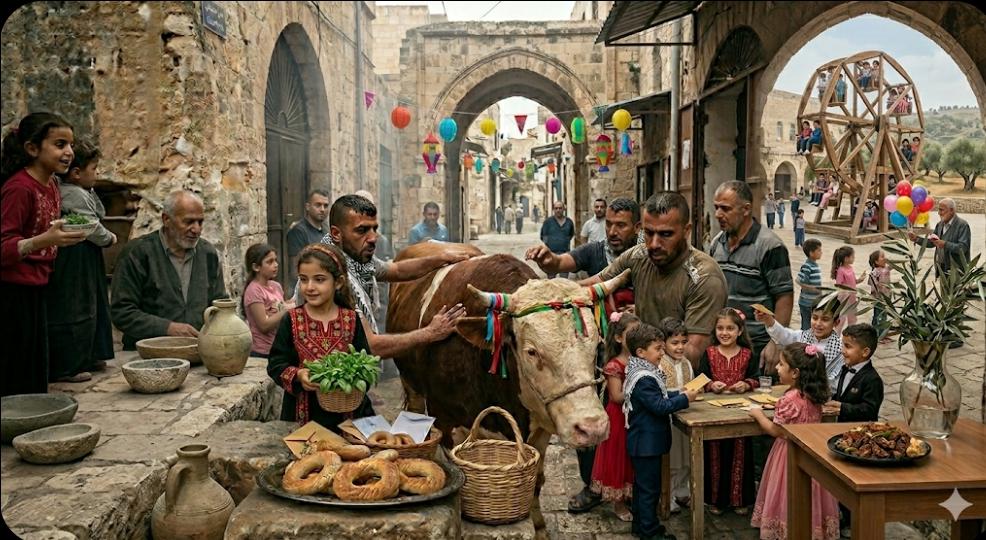
The Feast Beneath the Olive Sky
During Eid al-Adha, Palestine is adorned with a spirit of deep solidarity and inherited values, where the fragrance of history mingles with the aroma of bitter Arabic coffee and the sacred rituals of sacrifice that draw hearts closer together.
The Spirit of Eid al-Adha in Palestine: Solidarity and Authenticity
• The Eid Prayer and the Echo of Takbirs Before sunrise, Palestinians begin making their way toward mosques and open prayer grounds. The air fills with the resonant takbirs of Eid flowing from the minarets with solemn beauty and reverence. Eid prayers at Al-Aqsa Mosque and in the grand mosques of major cities become scenes that embody unity, faith, and collective belonging.
• The Ritual of the Sacrifice
Immediately after the prayer, families begin preparing the udhiyah — the sacrificial offering — either in front of their homes or on nearby farms. The ritual is regarded as an act of devotion and remembrance of Prophet Ibrahim’s story of sacrifice and mercy. One of the most cherished customs is ensuring that meat reaches the poor and those in need before it is shared among relatives and guests.
Al-Ma‘laq: The First Breakfast of Eid
The breakfast of the first Eid morning holds a special place in Palestinian homes. Families gather around a dish known as al-ma‘laq — freshly fried liver and lungs from the sacrifice, cooked in olive oil with onions and traditional village spices shortly after the slaughter is completed. For many, its aroma is inseparable from the memory of Eid itself.
Family Visits and Eidiyah "ceremonial money gift"
Men and young relatives set out to visit sisters, aunts, and extended family members. Guests are welcomed with ka‘k al-Eid (cookies) and unsweetened Arabic coffee, while children and women receive eidiyah — small monetary gifts offered as a gesture of joy and blessing.
Mansaf and Grand Family Feasts
At the center of the Eid lunch table stands either mansaf or the famous Qidra Khaliliyya of Hebron. Around these dishes, extended families gather from different homes to eat from one table — a living symbol of generosity, kinship, and togetherness.
Story: The Eid of the Qidra in Grandmother Layla’s Courtyard The Clay Oven and the First Steam of Morning
In one corner of Hebron’s Old City, Grandmother Layla stood before her clay oven, watching with experienced eyes as steam rose from the great copper pots. Eid al-Adha had begun hours earlier, yet the movement inside the family courtyard had not slowed for a moment. Her granddaughter Ruqayya came running in her embroidered dress decorated with colorful beads, carrying a small basket filled with fresh basil leaves. “Sitti Layla!” she called joyfully. “Grandfather and the men finished distributing the meat — they’re coming into the courtyard now!” Grandmother Layla smiled and wiped her hands on the edge of her white apron. “A thousand welcomes, my dear,” she said warmly. “Eid is never complete without everyone gathered together. Bring me the basil for extra blessing, and prepare the coffee cups.”
When the Family Returned Home
Grandfather entered alongside his sons, their faces carrying the quiet satisfaction that follows the completion of the sacrificial ritual. The house filled instantly with greetings: “Blessed Eid.” “May it return to you in health and happiness.” At that moment, Grandmother Layla lifted the lid of the fragrant Qidra Khaliliyya. The rich scent of clarified butter, turmeric, and tender lamb filled the air as she poured the steaming dish over fresh loaves of warm bread. The entire family gathered around the long table set beneath the open sky of the courtyard. It was never simply a meal. It was a declaration of love.
Stories Beneath the Olive-Colored Evening
Ruqayya watched her grandmother carefully distribute pieces of meat among the family with tenderness and patience, while her grandfather shared stories about the Eids of long ago beneath the olive trees. Laughter rose through the courtyard like music. Then Grandmother Layla leaned toward Ruqayya and whispered softly: “You see, my little one? Eid isn’t only about new clothes and meat. Eid is when this door stays open… and when laughter keeps bringing us back to one another.”
The Secret Hidden in the Land
As the sun of the first Eid day slowly faded, Ruqayya sat beside her grandmother on the old stone doorstep, watching children run through the alleyways waving bright balloons above their heads. And in that quiet moment, they all felt that this land carried a secret — something that gave joy a different taste. A taste that resembled steadfastness. And resembled the warmth of a grandmother’s hand resting gently upon her granddaughter’s head.