Eid al-Fitr in Palestine
How Palestinians Turn Eid al-Fitr into a Living Tapestry of Memory, Joy, and Belonging
Celebrating Eid Across Palestine
As the fasting month draws to its close, the alleyways of Jerusalem, Nablus, and Gaza begin to fill with fragrances that seem to carry joy itself. In Palestine, Eid arrives clothed in resilience woven with love, memory, and deeply rooted tradition.
The Spirit of Eid in Palestine
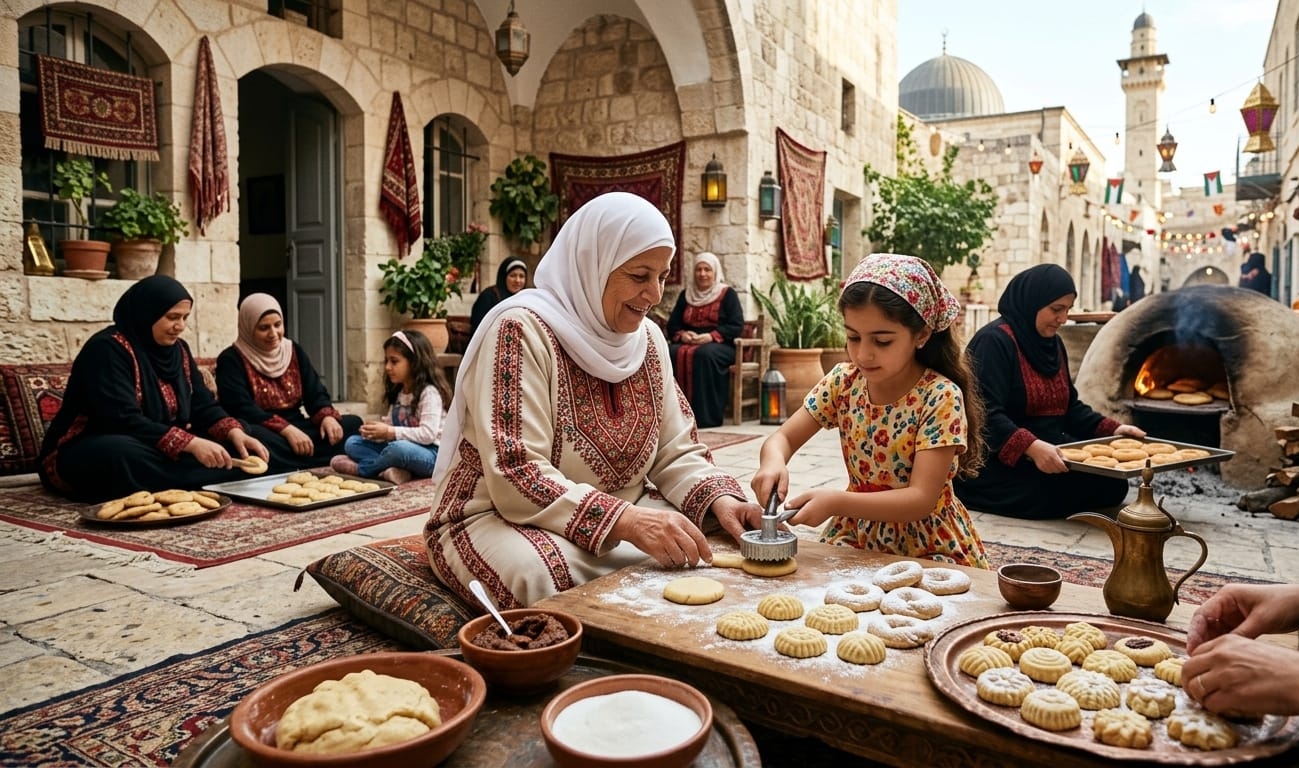
Traditions Passed Through Generations The Season of Naqi‘ and Holiday Sweets Long before the morning of Eid arrives, Palestinian homes transform into lively workshops devoted to preparing ma‘moul and ka‘k al-Eid. Women gather around large tables shaping dough by hand and engraving delicate patterns using the traditional wooden minqash mold. The process is far more than baking; it is a social ritual that fills entire neighborhoods with the scent of clarified butter, mahleb spice, anise, and fennel. In many homes, the making of Eid sweets becomes a celebration in itself.
Dawn Takbirs and the Gathering at the Mosques
At first light, Palestinians stream toward Al-Aqsa Mosque and the grand mosques of their cities dressed in new clothes and carrying the joy of Eid in their hearts. The takbirs echo through the streets and stone alleys, powerful enough to stir the soul itself — a declaration that celebration and faith endure even in difficult times.
Visiting Relatives and the Tradition of Eidiyah "ceremonial money gift"
After the prayer, families begin making rounds of visits to sisters, aunts, and relatives across towns and neighborhoods. Children eagerly await the giving of eidiyah — small sums of money offered during Eid. Yet in Palestinian culture, eidiyah is more than a simple gift; it is an expression of affection, kinship, and continuity between generations.
Comforting Hearts and Visiting the Graves
Among the most enduring customs is the visit to cemeteries after the Eid prayer. Families bring coffee and holiday sweets, offering prayers for departed loved ones. It is a uniquely Palestinian moment where gentle sorrow and necessary joy exist side by side — where remembrance becomes part of the celebration itself.
Gaza’s First Eid Breakfast: Feseekh and Tomato Fry
In Gaza especially, the first breakfast of Eid often centers around feseekh — salted fish served with fried tomatoes and peppers. The tradition is believed to revive the appetite after a month of fasting and remains one of Gaza’s most distinctive culinary customs during Eid.
Story: The Symphony of Ka‘k in Grandmother Layla’s House
Before Dawn Touched the Minarets The first threads of dawn had not yet brushed the minarets of the city, yet Grandmother Layla’s home was already glowing with warmth and light. The scent alone told the story. An extraordinary blend of anise, fennel, and authentic Arab ghee drifted through every corner of the house. At the center of the wide courtyard sat Grandmother Layla like a queen upon her wooden chair, a large basin of perfectly rested dough before her. Beside her sat little Ruqayya, no older than ten, tying a small scarf around her head while trying with utmost seriousness to imitate her grandmother’s movements. “My dear Ruqayya,” Grandmother Layla said gently, handing her a soft piece of dough, “the pattern must be like the embroidery on a thobe — delicate and beautiful.” Ruqayya gripped the carved minqash mold tightly and held her breath as she pressed tiny designs into the surface of the pastry. The moment she finished, she lifted it proudly. “Look, Sitti! She turned out like a bride!” Grandmother Layla burst into laughter and pulled the girl close to her chest. “Bless these little hands, moon of my days,” she said warmly. “This one will be the sweetest piece in the whole tray.”
A House That Became a Festival
Soon, the women of the neighborhood and Ruqayya’s aunts filled the house, transforming it into a festival of stories, laughter, and spontaneous zagharid ululations. Hands moved with astonishing skill, wrapping dough around date filling scented with cardamom. In the corner of the courtyard, the old oven glowed with fire as tray after tray of golden pastries emerged, shining like bars of gold. The entire house pulsed with life.
The Morning of Eid
By the time the Eid sun had risen, Ruqayya had already put on her new dress with its wide pleats and stood eagerly by the door awaiting visitors. Her grandfather and uncles entered with booming laughter, and soon eidiyah notes began finding their way into the tiny pocket of her dress. “Sitti! The ka‘k is ready!” Ruqayya shouted as she hurried toward the guests carrying a decorated serving tray. Grandmother Layla took a piece of pastry and looked at her granddaughter with eyes glowing softly with joy. “You know, my little one,” she said, “Eid is not only about sweets and sugar. Eid is this gathering… and your laughter, which to me is worth more than the whole world.”
The Joy We Make With Our Own Hands
Outside in the neighborhood square, the swings rose and fell while children’s laughter filled the air. From her balcony, Grandmother Layla watched Ruqayya soar high into the sky on a swing, her happiness spilling into the alleyways below. And in that quiet moment, she understood once more that Eid in this land is a form of beautiful resilience — a joy people create with their own hands so its sweetness remains forever alive in memory.