The Palestinian Wedding: A Symphony of Henna and the Roar of Dabke
"A journey into the finest details of Palestinian joy; from henna patterns that tell stories of the land to the Zaffa that echoes through the alleys, and the Dabke that unites hearts before feet."
Henna Night… Patterns of Rose Water and Belonging
The true rituals of joy begin with Laylat al-Henna (The Henna Night), where women gather around the bride in a session filled with traditional songs known as Al-Mahaha. The green henna powder is kneaded with distilled rose water, and intricate patterns are drawn on the palms of the bride and her companions. This scene is the most vivid visual memory for those in exile; the dark hue of the henna and the scent of roses wafting through the ancient Hosh (courtyard). To the foreigner, this is an art form that transcends decoration to become a symbol of connection to the soil. *Al-Mahaha (Zaghareet): A traditional female folk art consisting of short poetic verses that begin with "Aa-wee-ha," followed by a long, high-pitched ululation expressing joy and pride.
The Zaffa and Dabke: An Earthquake of Joy and the Voice of Dignity
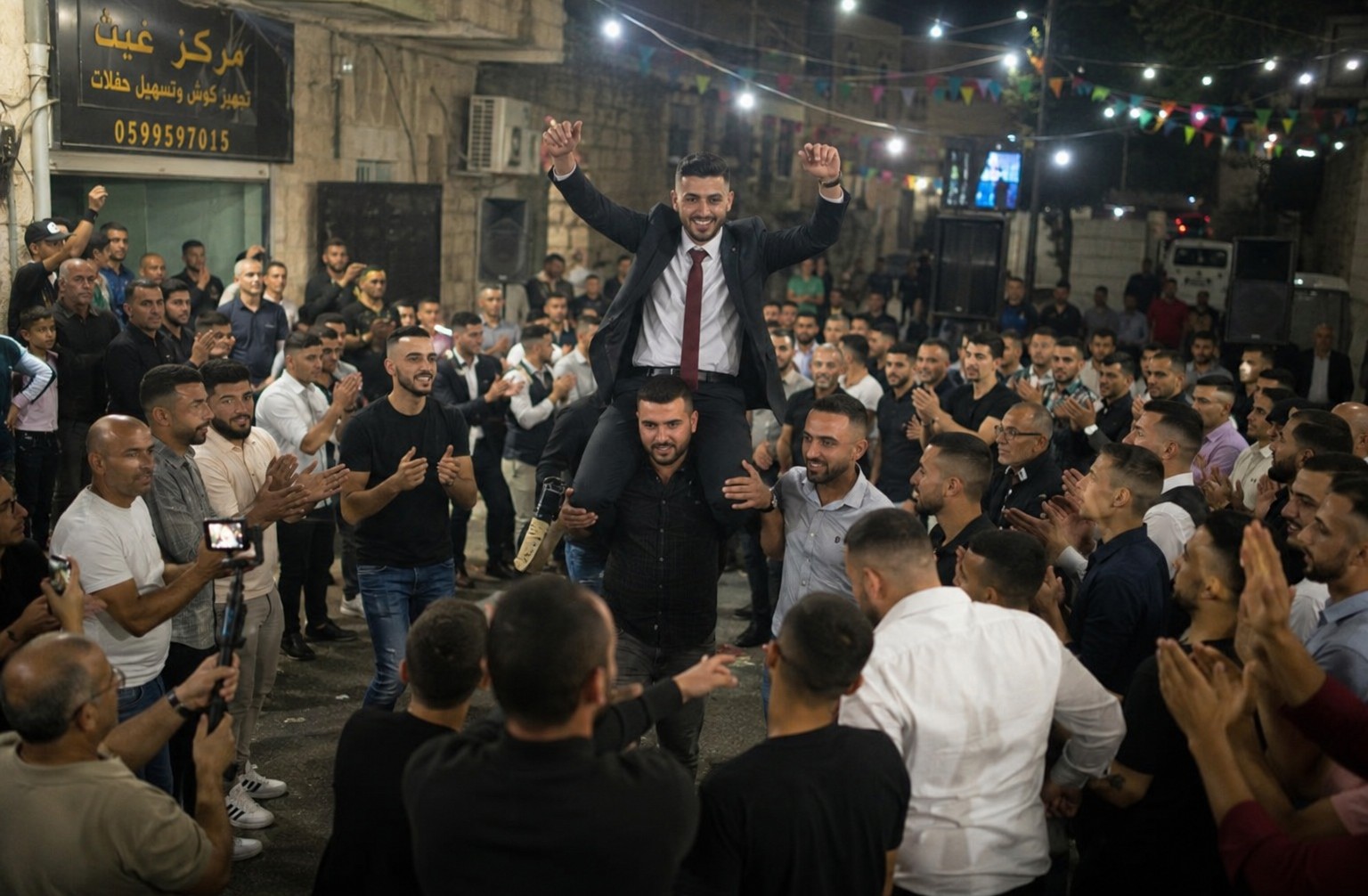
As the Zaffa (the wedding procession) begins, the wedding turns into a popular demonstration roaming the neighborhood streets. The youth carry the groom on their shoulders, and the voices of the Haddaya (folk poets) and improvised Zajal rise. Here, a "Collective Flow" surges toward the Dabke circle; men and youth line up, interlocking hands and striking the earth with synchronized stomps called Al-Khabta. This sonic tapestry of roaring footsteps and the sound of the Mijwiz remains etched in the soul of everyone who experiences it, representing the ultimate degree of unity and solidarity. *Dabke: A collective folk dance relying on rhythmic harmony. The "Shamaliyya" and "Tayyara" are among the most famous types, reflecting strength and chivalry.
A Dialogue of Wisdom: "Joy is a Covenant, Not Just a Celebration"
Grandmother Laila watched the Dabke circle from afar and said to her granddaughters: "My daughters, a wedding in our land is a covenant renewed between the people and the land. When the youth strike the ground in the Dabke, they are confirming that our roots are still here." She continued, pointing to the bride: "And henna is not just a color; it’s a mark that joy is imprinted within us and cannot be erased by time. Even for those far from home, the echo of the Zaffa rings in their ears wherever they go."
Evocative Visual and Auditory Elements:
- 1The Embroidered Thobe: The bride and women wear the "Palestinian Thobe" with patterns that vary by region (such as the "Hebron" or "Ramallah" stitch), forming a living artistic canvas.
- 2Mijwiz and Yarghul: Traditional wind instruments that give the Dabke its unique, enthusiastic rhythm, drawing listeners from afar.
- 3Henna Patterns: These form a specific visual identity for the Palestinian bride, expressing both delicacy and strength.
Conclusion: Joy That Defies Distance
Everyone realized that the Palestinian wedding is the "Great Theater" where all arts of identity are showcased—from poetry and Zajal to dance and embroidery. It is the state that makes the expatriate feel as if they never left their homeland, and leaves the foreigner mesmerized by a people who transform joy into an act of resilience. As Grandmother Laila always repeats at the end of every evening: "May all our days be filled with joy... and may we see the absent ones find peace in our land, while the Dabke shakes the earth and our minds remain at ease."